
Generative Art Timeline · Chapter 5: Artist-Programmer Era (1970s)
1976
Bertram Raphael Publishes The Thinking Computer
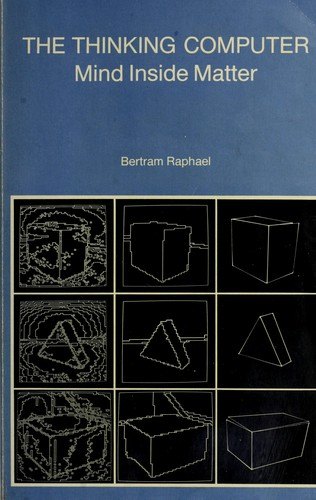
Bertram Raphael’s book was one of the first to explain to ordinary readers how AI actually worked, written by someone who helped build Shakey (remember him?), the first robot that could plan its own actions. The skills it covers, searching for answers, storing knowledge, understanding English and planning steps, are still the core jobs of today’s AI.
But not the process of today because Raphael’s book described symbolic, rules-based AI and not the learning kind.
Raphael was a computer scientist at the Stanford Research Institute when he published The Thinking Computer: Mind Inside Matter. Written for general readers, it explained how programs of the time searched for solutions, represented knowledge, understood simple English and planned the actions of robots, with examples from SRI and other laboratories.
Raphael also wrote SIR, a 1964 program at MIT that answered questions by storing facts as relations between words.
Raphael with this book, SIR and Shakey was the epitome of symbolic AI, nearing its peak in the 1970s.
Text by Peter Bauman. Generative Art Timeline, Le Random.
Sources
People
Bertram Raphael
Filed under
- Technologies
- symbolic AI
- People
- Bertram Raphael
- Other subjects
- knowledge representation, Shakey, sri, The Thinking Computer
Related moments
Le Random editorials
Le Random podcast
- Timeline Ch 5—Artist-Programmer Era (1970s) with Joan Truckenbrod, Hans Dehlinger & Anika Meier — listen with transcript on Le Random (14 Jan 2024, 65 min). Chapter 5’s episode. Apple Podcasts · Spotify