
Generative Art Timeline · Chapter 4: Digital Era (1960s)
1967–1972
Shun-ichi Amari Publishes Learning Rules for Neural Networks
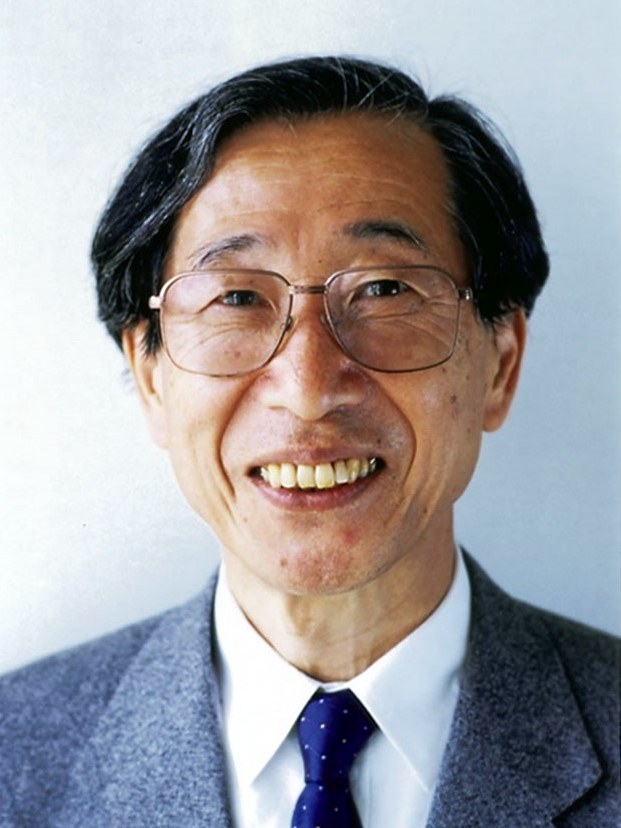
In 1967, Japanese engineer Shun-ichi Amari published “A Theory of Adaptive Pattern Classifiers” in IEEE Transactions on Electronic Computers.
The paper described learning by nudging a machine’s weights after each example, the canonical method known as stochastic gradient descent. Jürgen Schmidhuber calls it probably the first paper to use the method for learning in multilayer neural networks.
Amari trained a five-layer network to sort patterns that no single straight boundary could separate. In 1972 he published a network that learned to associate patterns by changing its connection weights. John Hopfield’s much more well known 1982 network rests on the same basic equations and is sometimes called the Amari-Hopfield network.
Text by Peter Bauman. Generative Art Timeline, Le Random.
Sources
- https://people.idsia.ch/~juergen/deep-learning-history.html
- https://www.kyotoprize.org/en/laureates/shun-ichi_amari/
People
Jürgen Schmidhuber
Movements
artificial intelligence, Machine Learning Art
Filed under
- Ideas
- ai history
- Technologies
- connectionism, deep learning, machine learning, neural networks, pattern recognition, recurrent neural networks (RNNs)
- People
- Jürgen Schmidhuber
- Places
- Japan
- Other subjects
- associative memory, Hopfield network, IEEE, John Hopfield, S. Saito, Shun-ichi Amari, stochastic gradient descent
Related moments
Le Random editorials
Le Random podcast
- Timeline Ch 4—Digital Era Pt I (1960s) with Dr A Michael Noll — listen with transcript on Le Random (07 Sep 2023, 60 min). Chapter 4’s episode. Apple Podcasts · Spotify
- Timeline Ch 4—Digital Era Pt II (1960s) with Michael Spalter — listen with transcript on Le Random (21 Sep 2023, 77 min). Chapter 4’s episode. Apple Podcasts · Spotify