
Generative Art Timeline · Chapter 4: Digital Era (1960s)
1962
Daphne Oram Develops Oramics: Hand-Drawn Sound
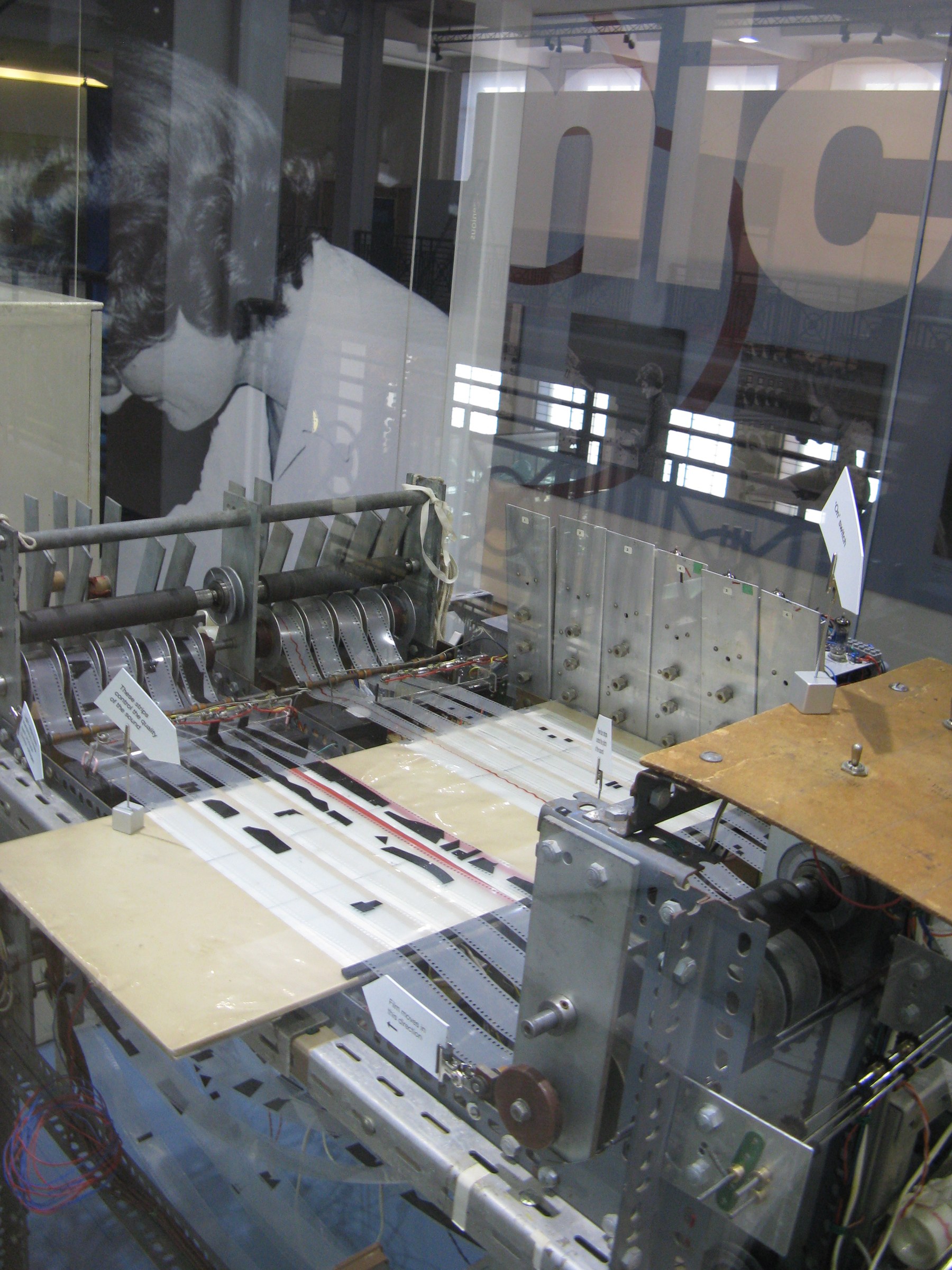
Connecting sound with gestures and the visible realm has long fascinated artists. In the twentieth century this was typically achieved by producing visuals and sounds separately and mixing them together. In the twenty-first century, with live coding and algoraves, sound could be coded and synced with visuals.
But Daphne Oram created a system where her own drawings manipulated and produced sound.
Oram co-founded the BBC Radiophonic Workshop in 1958 before leaving the following year to work on her own. With a grant from the Calouste Gulbenkian Foundation in 1962 she began building Oramics, a machine that turned drawing into sound.
How exactly was this possible you ask? By the late 1960s, shapes painted on ten strips of 35 mm film were read by photocells as the strips moved. Through her device, she could control the sound's pitch, volume and timbre. It was among the first ways to compose electronic music by drawing, a graphic score that the machine played directly.
Text by Peter Bauman. Generative Art Timeline, Le Random.
Sources
- Oramics Machine. Science Museum Group Collection.
- https://collection.sciencemuseumgroup.org.uk/objects/co8188395/oramics-machine-synthesizer
Movements
Electronic Music, Generative Sound
Filed under
- Ideas
- Electronic Music, Generative Music, Sound Art, music
- Other subjects
- BBC Radiophonic Workshop, Daphne Oram, drawn sound, graphic score, Oramics, synthesizer, women in music technology
Related moments
Le Random editorials
Le Random podcast
- Timeline Ch 4—Digital Era Pt I (1960s) with Dr A Michael Noll — listen with transcript on Le Random (07 Sep 2023, 60 min). Chapter 4’s episode. Apple Podcasts · Spotify
- Timeline Ch 4—Digital Era Pt II (1960s) with Michael Spalter — listen with transcript on Le Random (21 Sep 2023, 77 min). Chapter 4’s episode. Apple Podcasts · Spotify