
Generative Art Timeline · Chapter 2: Modern Era (1850–1949)
1890
Henri Poincaré Publishes Seminal Paper on the Three-Body Problem
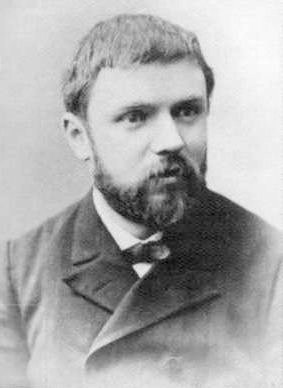
Henri Poincaré's work in the late 19th and early 20th century laid the foundation for the modern science of chaos and complexity, which has been critically influential on computer and generative art. The well-known three body problem concerned the difficulty of predicting the position of three celestial bodies in close proximity to another. Poincaré did not actually solve the problem but he did discover the butterfly effect which gave rise to the new field of chaos theory in the 1960s.
Text by Peter Bauman. Generative Art Timeline, Le Random.
Sources
People
Henri Poincaré
Movements
generative art, Math Art, Chaos Theory
Filed under
- Ideas
- butterfly effect, celestial mechanics, complexity, determinism, science, three-body problem, unpredictability
- People
- Henri Poincaré
Echoes across time
- 1972 · Edward Lorenz Presents Paper on the Butterfly Effect
- 1984 · Order Out of Chaos: Man’s New Dialogue with Nature by Ilya Prigogine and Isabelle Stengers
- 1986 · The Beauty of Fractals by Heinz-Otto Peitgen and Peter Richter
Related moments
Le Random editorials
Le Random podcast
- Timeline Ch 2—Modern Era with Kate Vass — listen with transcript on Le Random (20 Jul 2023, 58 min). Chapter 2’s episode. Apple Podcasts · Spotify