
Generative Art Timeline · Chapter 10: On-Chain Era (2020s)
2021
Latent Diffusion Models Introduced
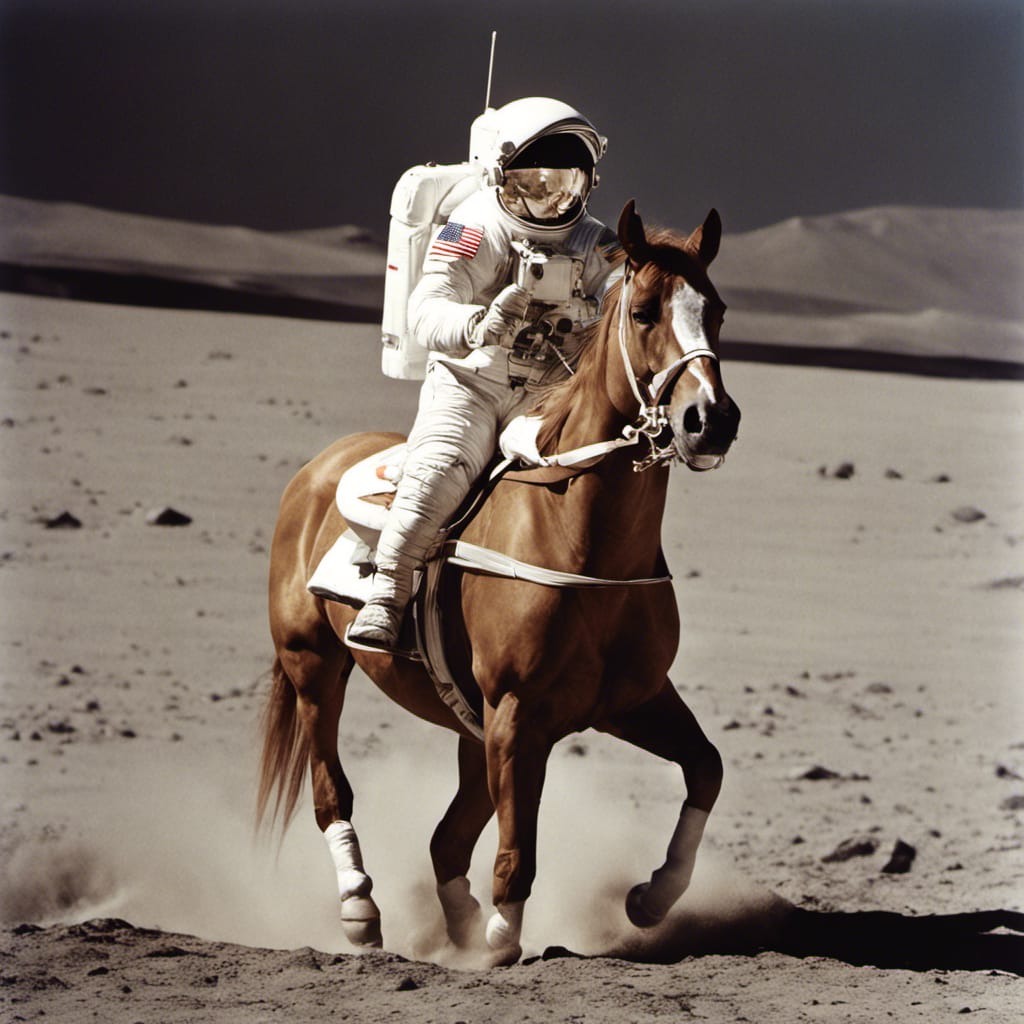
Unlike DALL-E, which generated images autoregressively from discrete image tokens, Latent Diffusion Models (LDMs) operated in latent space and were the step that enabled text-to-image technology to go mainstream. Instead of working directly with pixels like Diffusion Models, LDMs first compress the image into a simpler, lower-dimensional space (called the latent space) using a pre-trained autoencoder. This compressed version of the image retains the essential information but is much less detailed. The diffusion model then works in this simpler space, which makes the process faster and less resource-intensive. Once the model has generated the image in the latent space, it’s converted back into a full, high-resolution image. Once this capability was introduced, text-to-image modeling became much less expensive and therefore widely available—and impactful.
Text by Peter Bauman. Generative Art Timeline, Le Random.
Sources
Movements
Machine Learning Art
Filed under
- Technologies
- artificial intelligence, autoencoder, DALL-E, diffusion models, generative AI, latent diffusion models (LDMs), latent space, text-to-image
Related moments
Echoes across time
- 1970 · Generación Automática de Formas Plásticas Exhibition at the Centro de Cálculo of the University of Madrid
- 2002 · Doug Eck Advances Neural Network Creative Expression
- 1979 · Cybernetic Symbiosis, Berkeley: Lawrence Hall of Science
Related moments
Le Random editorials
- Jess Tucker on Longing for a Face, Peter Bauman, November 11, 2025
- John Maeda on Computational Evolution, Peter Bauman, July 22, 2024
- Reprogramming Sensory Habits, Luba Elliott, June 9, 2025
- Matt Hall and John Watkinson on Beginning Movements, Peter Bauman, September 25, 2024
Le Random podcast
- Timeline Ch 10—On-Chain Era (2020s) with Erick Calderon, Lauren Lee McCarthy, Itzel Yard & Rafael Lozano-Hemmer — listen with transcript on Le Random (02 Sep 2024, 63 min). Chapter 10’s episode. Apple Podcasts · Spotify