From Le Random’s Generative Art Timeline. Original moment texts by Peter Bauman.
What makes a system generative?
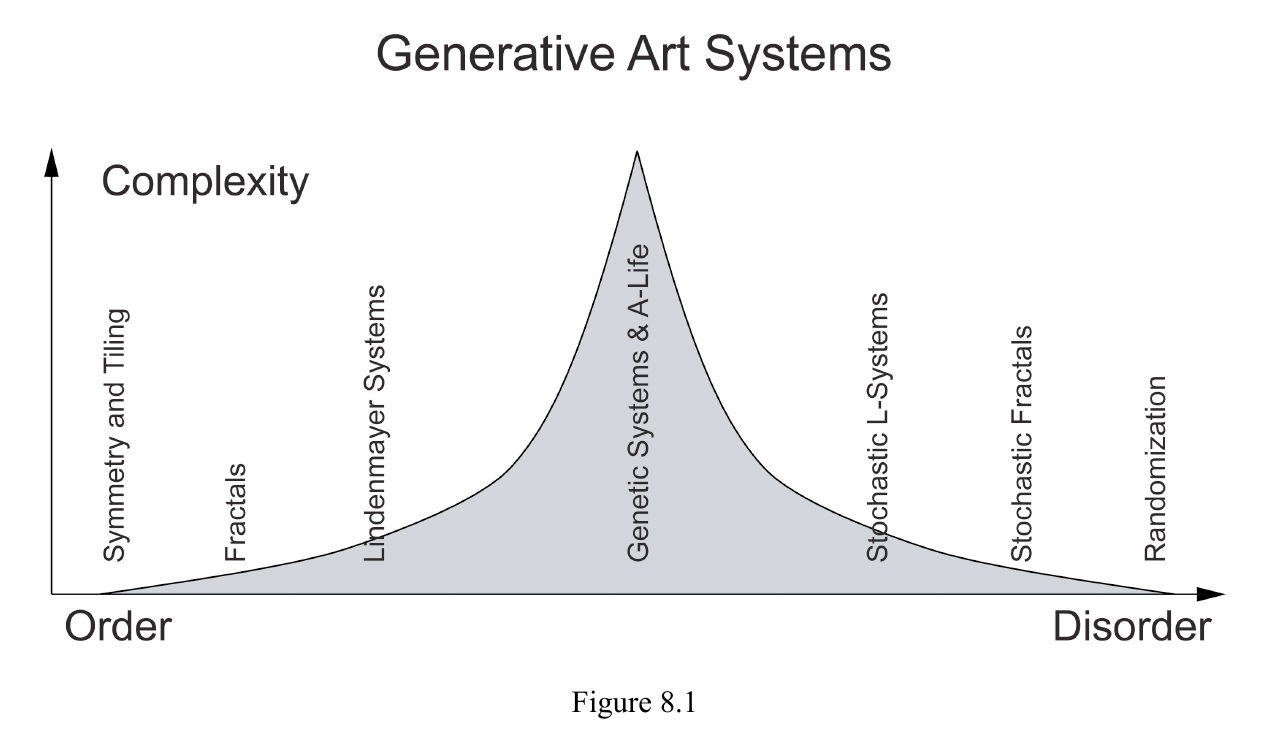
Figure 8.1, ‘Generative Art Systems,’ from Philip Galanter’s 2003 paper What Is Generative Art? Complexity Theory as a Context for Art Theory, mapping generative methods between order and disorder. Philip Galanter, 2003, Figure 8.1. Reproduced from the author’s PDF. Image source.
In his seminal text from over twenty years ago, Galanter asks and answers, “What is Generative Art?” in the must-read essay for anyone interested in generative art: “What is Generative Art? Complexity Theory as a Context for Art Theory.” This is the essay that nearly everyone cites when defining generative art. This author’s own definition is highly influenced by Galanter. Galanter spoke to this…
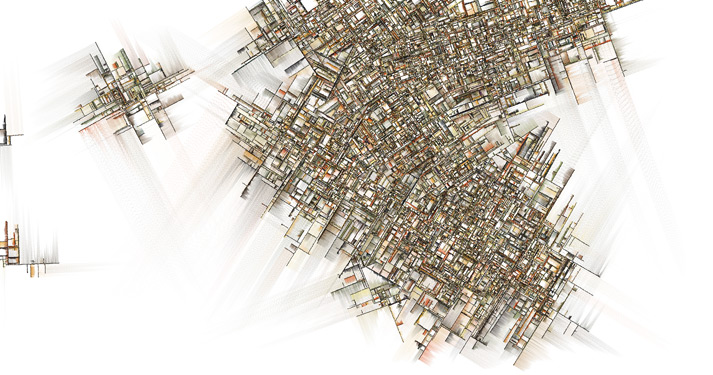
An output of Jared Tarbell's Substrate, the Processing sketch whose single perpendicular-growth rule produces city-like crystalline structures. Jared Tarbell, Substrate, 2003. Courtesy the artist, complexification.net.
Made with Processing, this 2003 masterpiece by Tarbell highlights one of the powers of generative art and computation: the ability to convey complexity from simplicity. A single growth rule based on perpendicular growth, from just a single line, manufactures intricate, urban-esque compositions. The simplicity of the rule in Tarbell’s Substrate helped to amplify the power of the new tool to creatives and still stands…
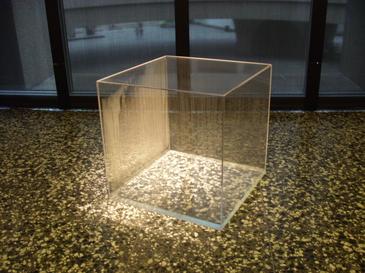
Condensation Cube (1963–65) is a sealed transparent acrylic cube containing a small quantity of water. The temperature differential between the inside of the cube and the room causes water vapour to condense and run down the inside walls in continually changing patterns. The rate of condensation and evaporation is affected by the temperature and humidity of the environment, resulting in an ever-changing and unpredictable…
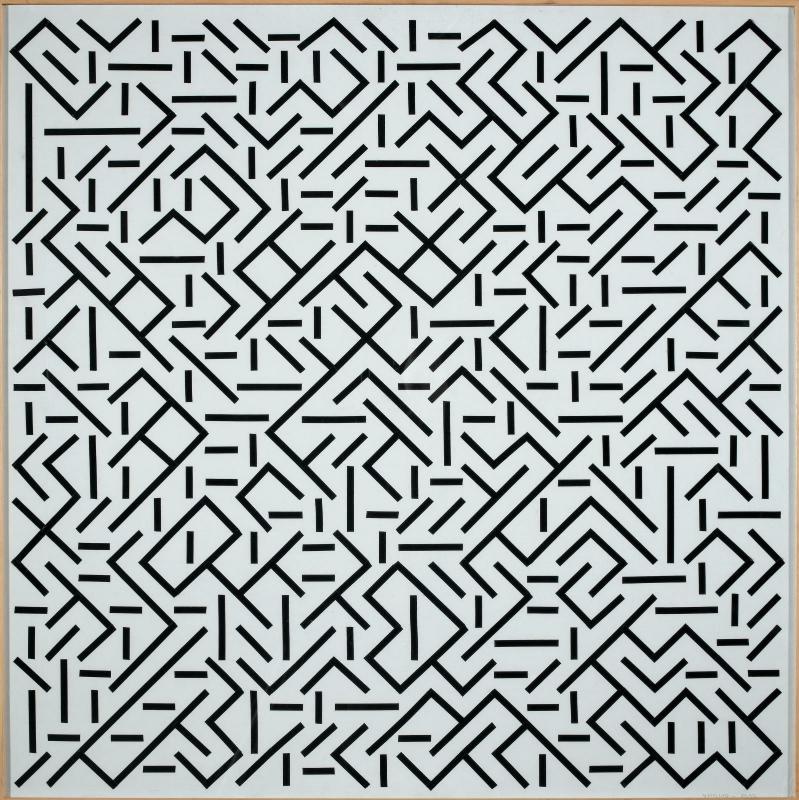
Meaning the “imaginary computer,” Molnár’s “machine imaginaire” is the now famous concept that she developed to imagine a computer to expand her creative process. The hypothetical machine allowed her to systematically create works that included all the possible combinations of forms she wished. Now based in Paris, It would take nearly another decade, 1968, before Molnár would gain access to an actual computer.
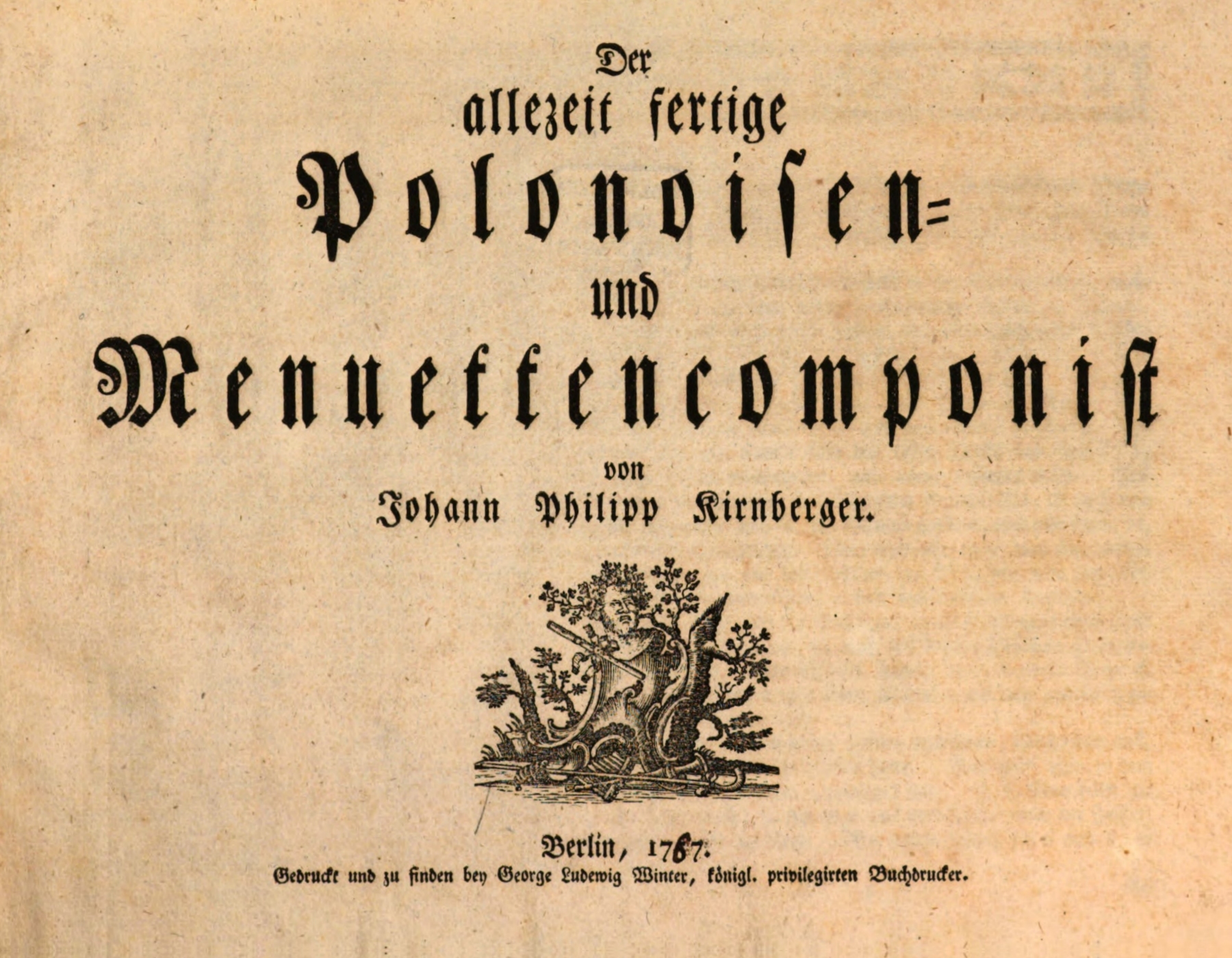
Johann Philipp Kirnberger, Der allezeit fertige Polonoisen- und Menuettencomponist, title page of the 1767 printing, Berlin: George Ludewig Winter. The work was first published in 1757. Johann Philipp Kirnberger / George Ludewig Winter. Bavarian State Library copy, reproduced via Wikimedia Commons; scan photographer unidentified. Image source.
Known as Musikalisches Würfelspiel (“musical dice game”), this method first published by Johann Philipp Kirnberger was a monumental event in the history of art and chance. The game was a musical composition technique in which pre-composed measures were selected by rolls of dice. Serving as one of the earliest examples of aleatoric (chance) music, it stands as one of the earliest examples generally of…
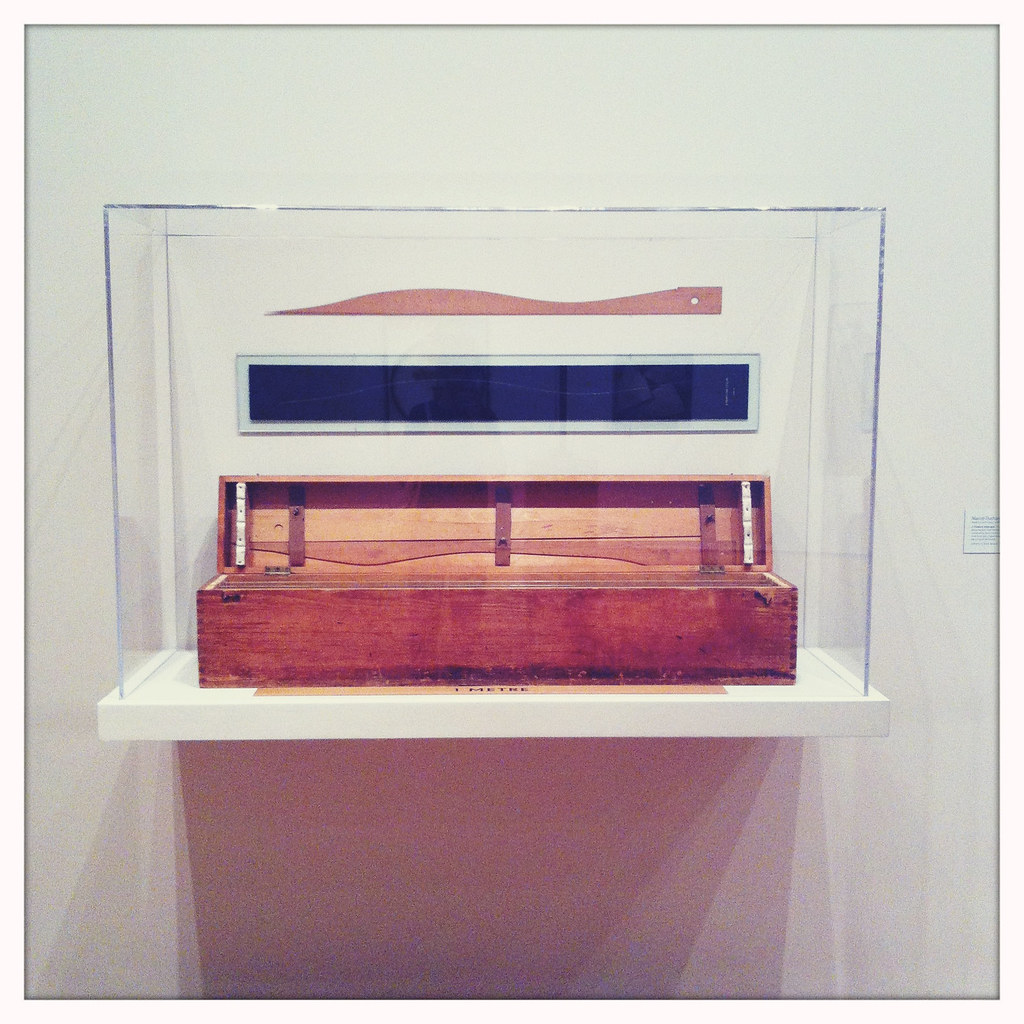
This revolutionary work of 1913 and 1914 remains one of the most famous examples of the use of chance in the history of art. Duchamp employed chance operations by dropping three one-meter threads, allowing them to take on random forms. He then traced and mounted these shapes as a commentary on the limitations of standard measurement systems. Duchamp’s exploration of chance and random processes…
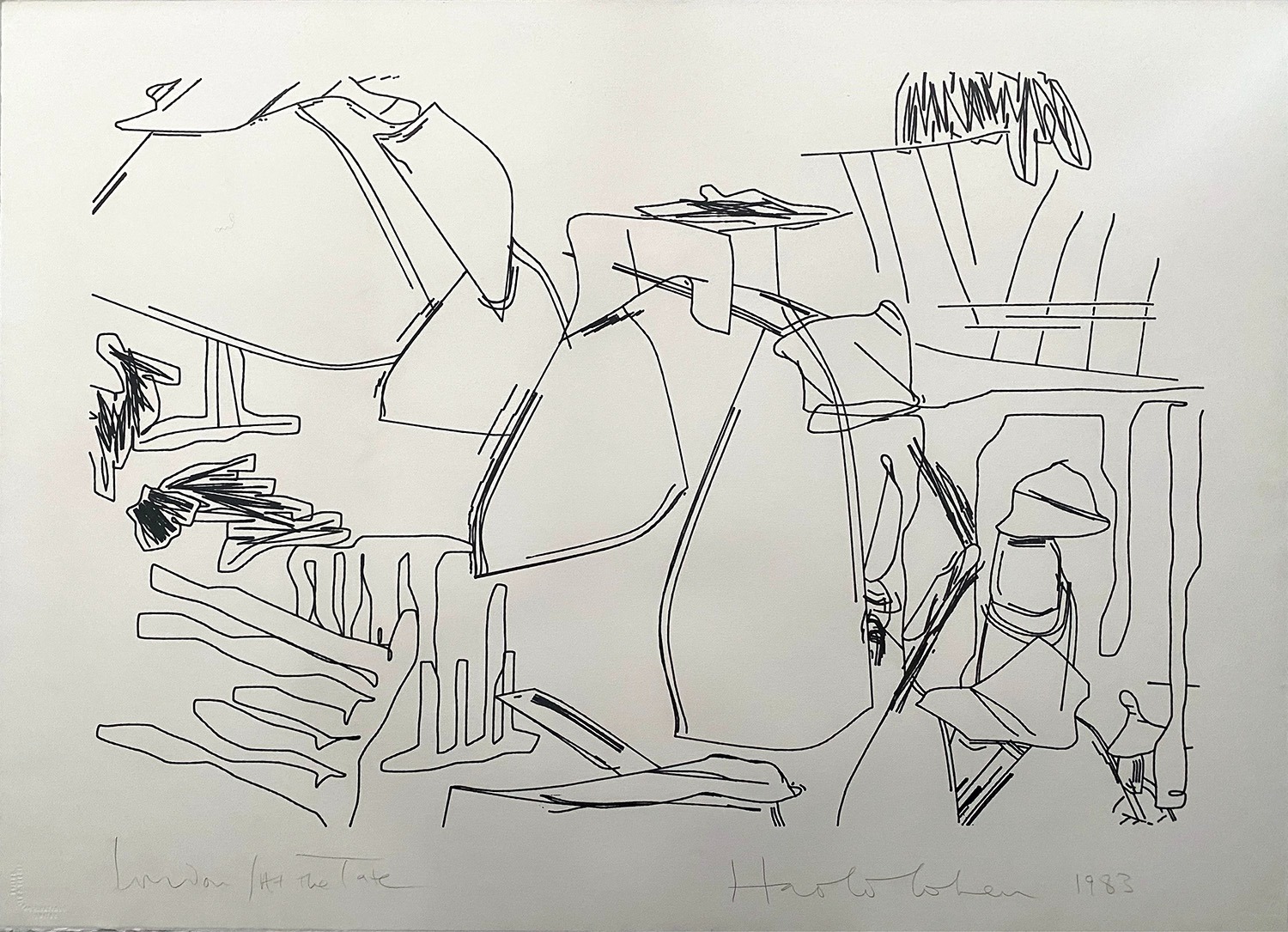
AARON, the autonomous drawing machine Cohen named at Stanford in 1973, pioneered the use of AI to create art. With his seminal 1973 essay “Parallel to Perception: Some Notes on the Problem of Machine-Generated Art,” Harold Cohen articulated his efforts to develop “autonomous art-making behavior” that was inventive and could “conjure meaning.” Cohen differentiated this “autonomous art-making” from computer art, which he did not…
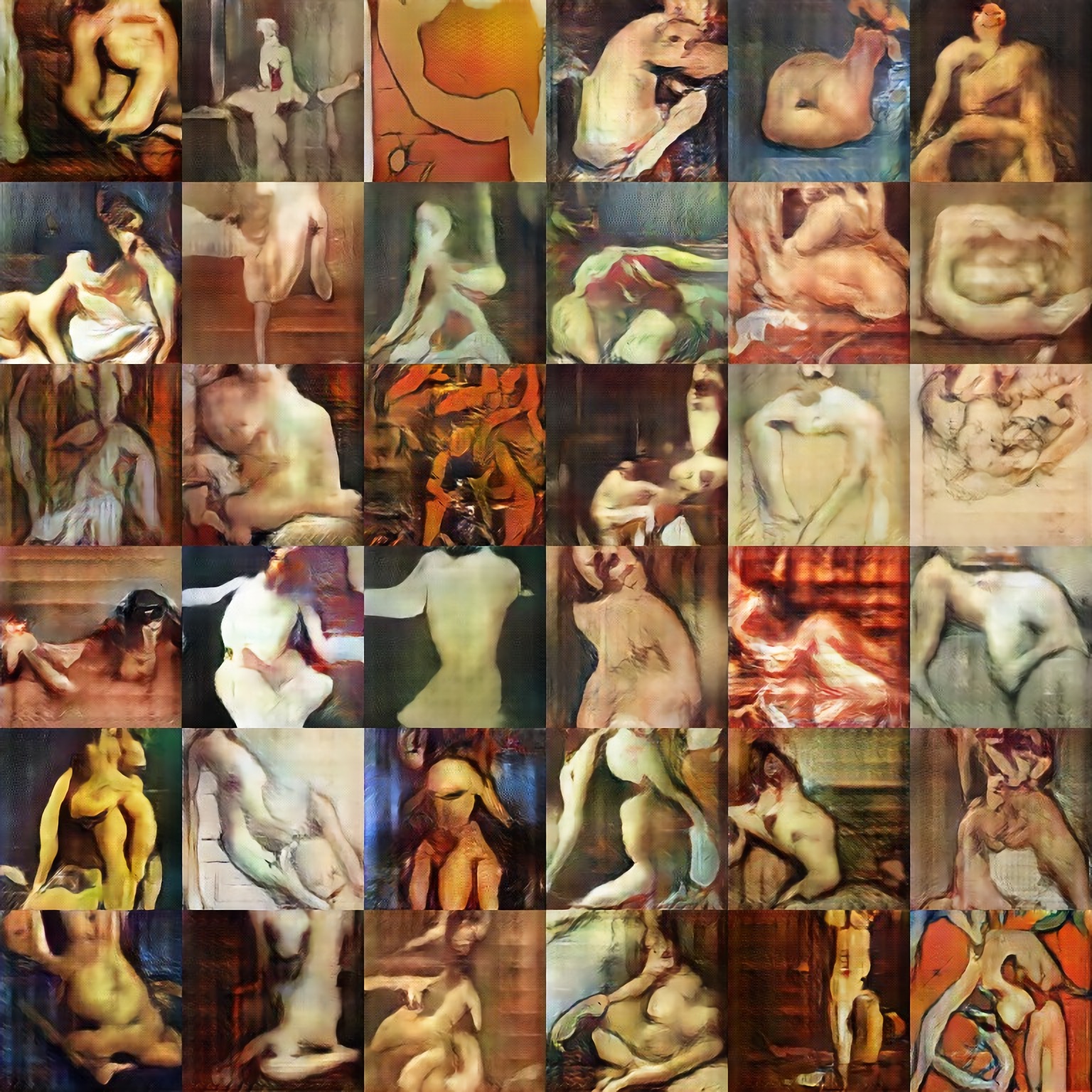
A grid of sample nude portraits generated by Robbie Barrat's nude-portrait GAN, published by the artist in the README of his own art-DCGAN repository. Robbie Barrat, sample output from nude-portrait GAN, art-DCGAN, 2018. Courtesy of the artist, via the artist's GitHub repository.
In 2017 Robbie Barrat began using Generative Adversarial Networks to make art, producing his first two significant bodies of work, Landscapes and Nude Portraits, which reached collectors in 2018. He had begun his explorations of AI in 2016, with a Bach-imitating LSTM in July and a rapping neural network in November. His initial attempt with landscapes yielded realistic but ultimately unremarkable results, highlighting the…
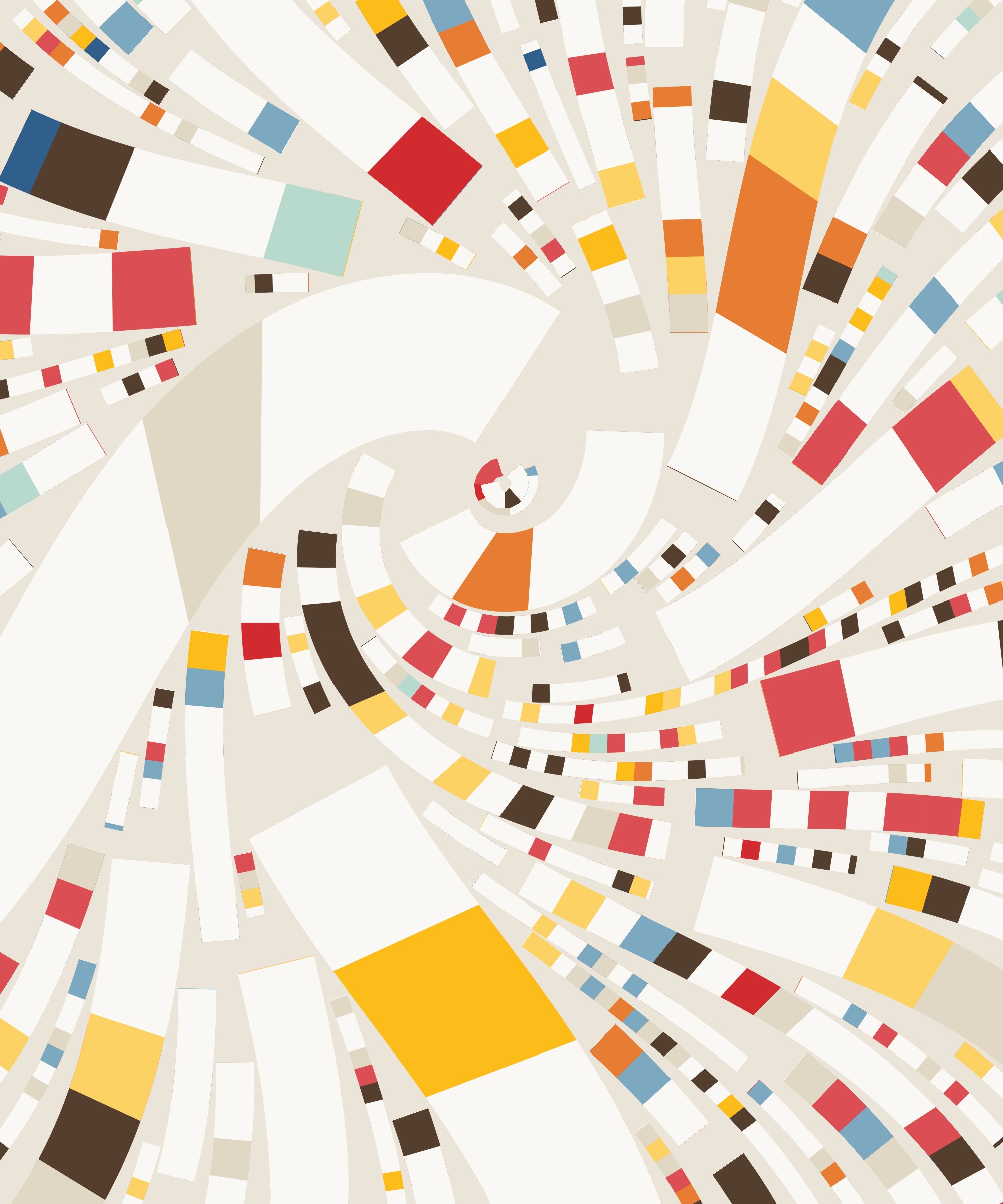
After the dust settled in a chaotic generative art summer of 2021, Tyler Hobbs’s Fidenza in the end remains perhaps the most celebrated. This versatile and aesthetically diverse generative algorithm stood out for its recognizable elegance. Rooted in the flow field algorithm for which the project is now nearly synonymous, Fidenza generates intricate, (mostly) non-overlapping curves that are layered with thick, curved rectangles, creating…
In his seminal series Process, documented comprehensively in the book Process Compendium 2004-2010, Casey Reas explores the intricate phenomenon of emergence through his unique artistic system. This system is built on the foundational elements of Forms, Behaviors and Elements, allowing Reas to generate an endless variety of visual compositions with his chosen visual grammar. Each element in this system—referred to as a simple machine—combines…