AI Art Timeline: From AARON to Learned Image Models
From Le Random’s Generative Art Timeline. Original moment texts by Peter Bauman.
1950s–1970s: defining AI and building an art-making system
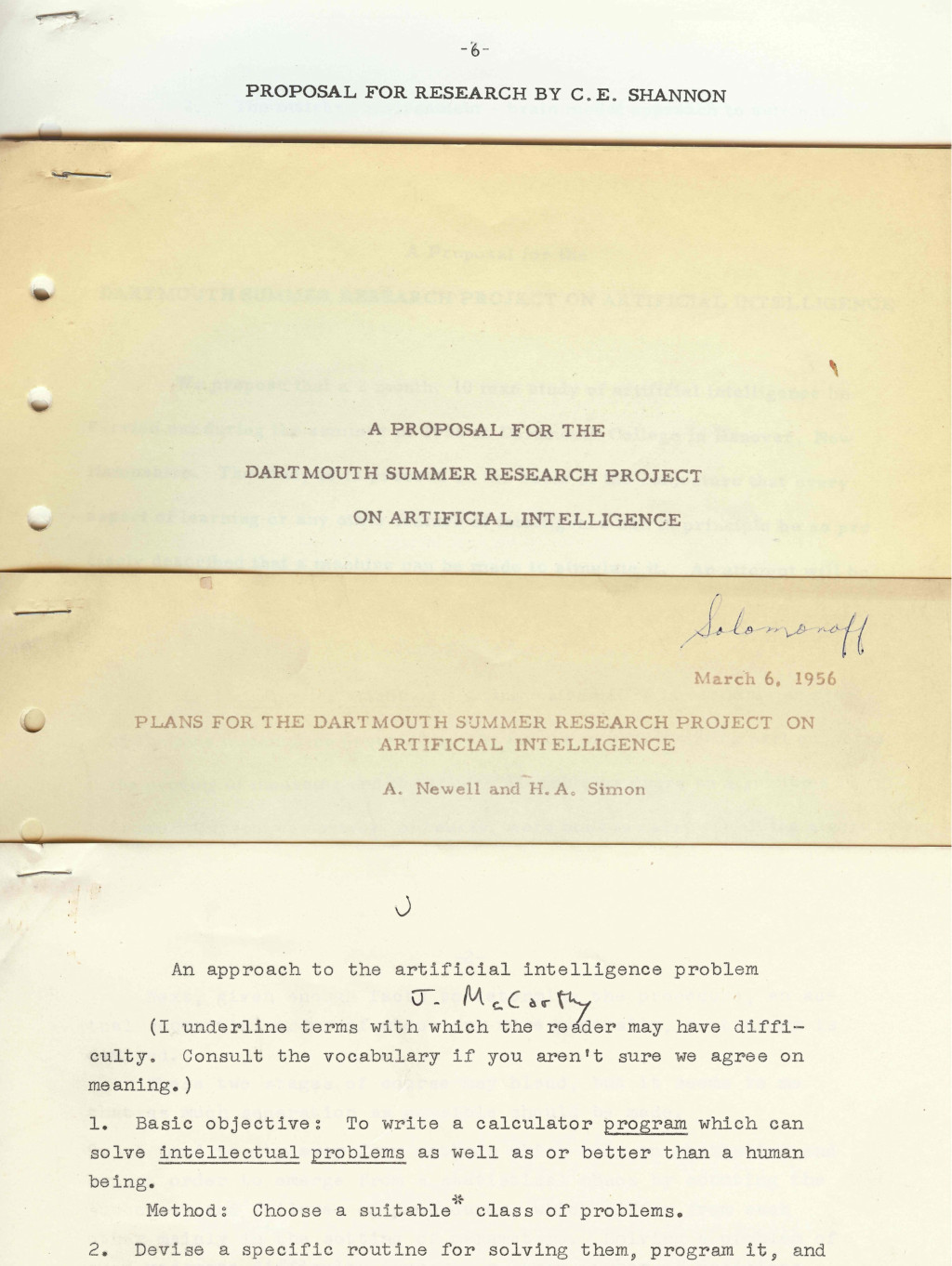
Ray Solomonoff's own fanned copies of the Dartmouth documents, with the title page of “A Proposal for the Dartmouth Summer Research Project on Artificial Intelligence” — the August 1955 typescript that coined the term — visible beneath Shannon's proposal and above Newell and Simon's plans. Ray Solomonoff's copies of the Dartmouth proposals, 1955–56. Ray Solomonoff Dartmouth papers, raysolomonoff.com.
John McCarthy coined the term “artificial intelligence” in a proposal for a Dartmouth College study written with Marvin Minsky (Harvard University), Nathaniel Rochester (IBM) and Claude Shannon (Bell Telephone Laboratories). According to the proposal, “the study is to proceed on the basis of the conjecture that every aspect of learning or any other feature of intelligence can in principle be so precisely described that…
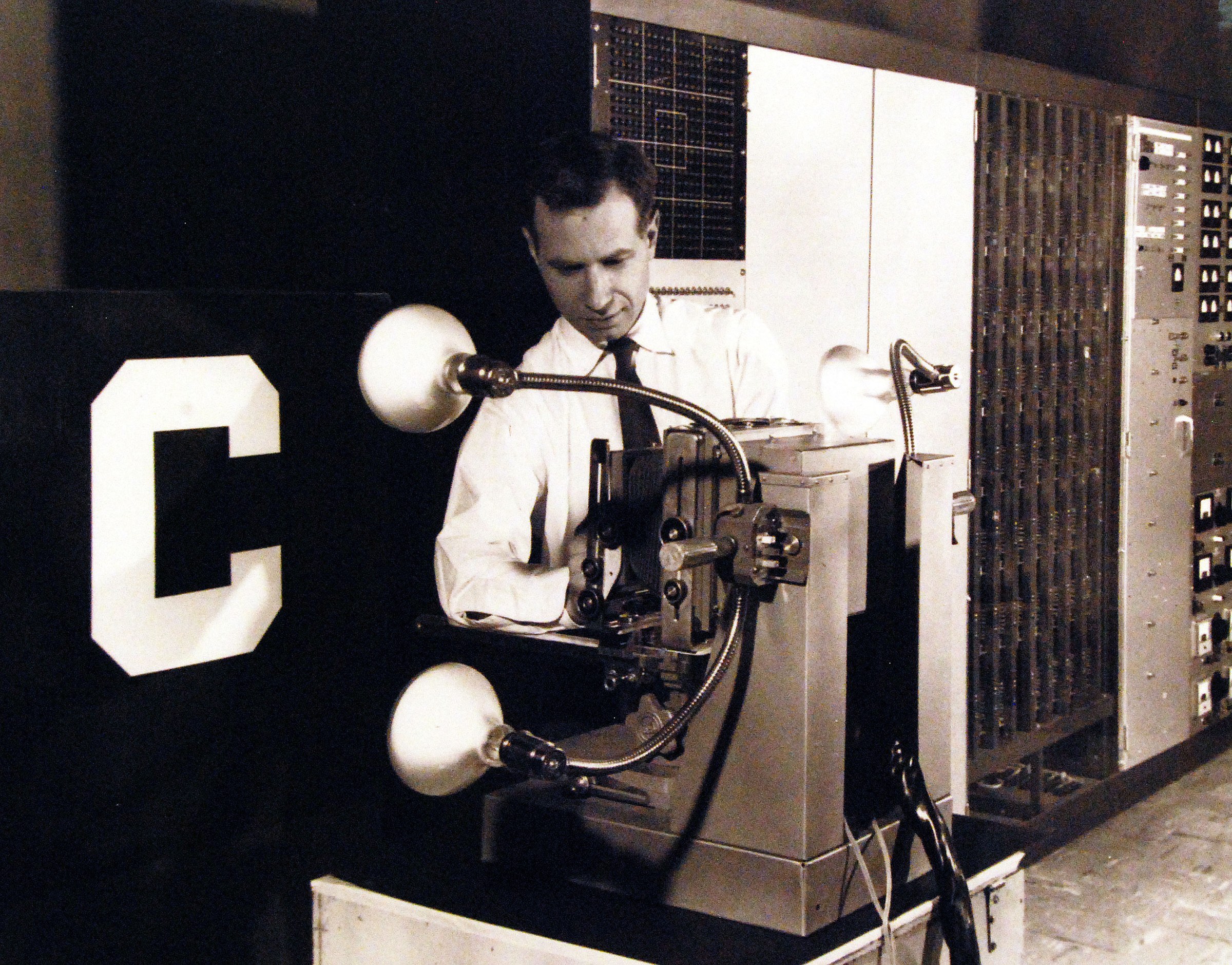
A U.S. Navy photograph of the Mark I Perceptron, the machine built to run Rosenblatt’s design, with an operator at its image sensor. The Mark I Perceptron, about 1960. U.S. Navy photograph (USN 710739), National Archives, via Wikimedia Commons.
Depending on how it goes with AI, the perceptron could end up being one of history's most important concepts, well, ever basically. Frank Rosenblatt's perceptron is essentially the first neural network and a monumental step in the story of deep learning AI art. The perceptron is also a bit of a tragic tale. A decade later, deep learning AI's anti-hero Marvin Minsky published Perceptrons,…
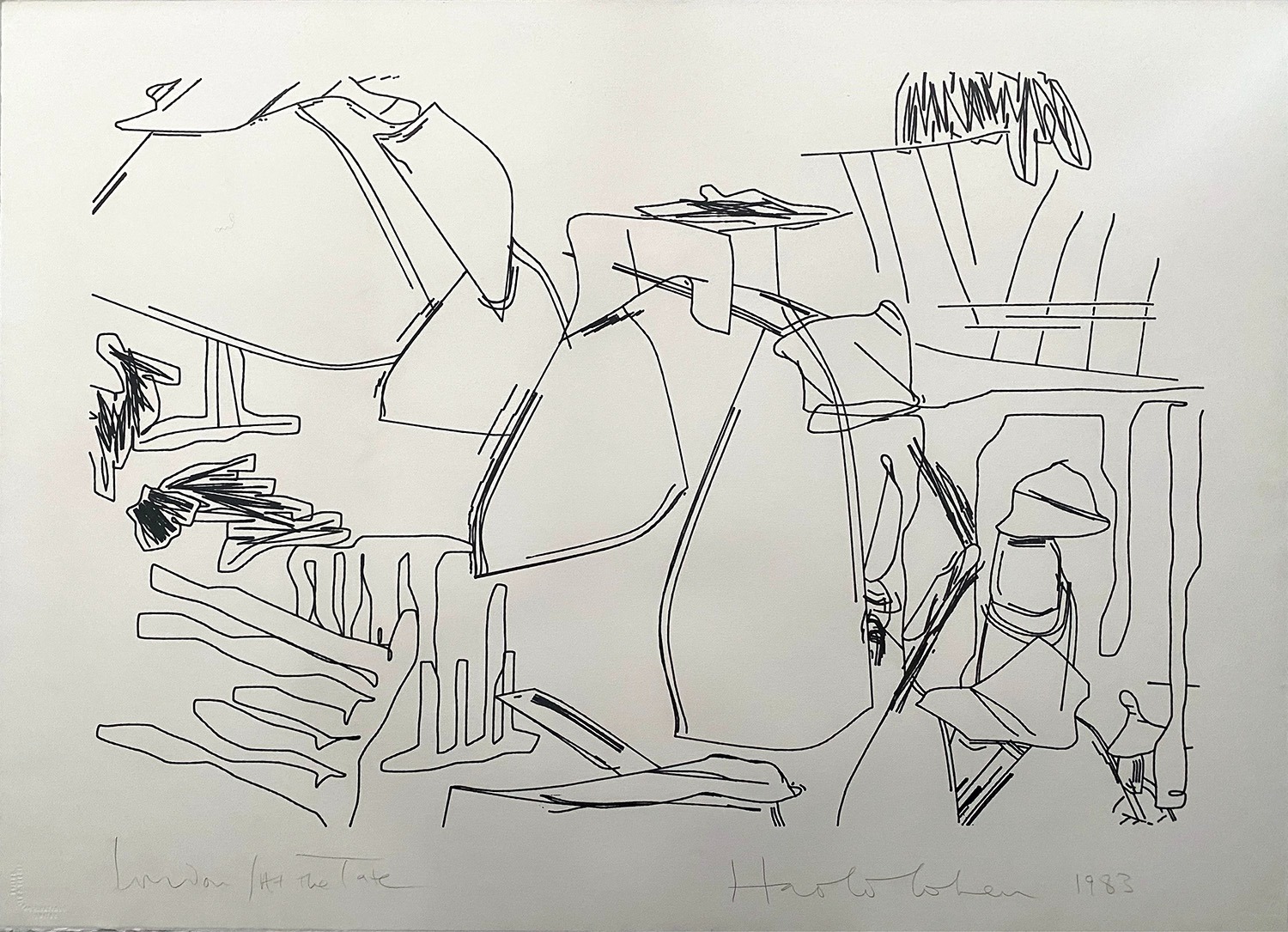
AARON, the autonomous drawing machine Cohen named at Stanford in 1973, pioneered the use of AI to create art. With his seminal 1973 essay “Parallel to Perception: Some Notes on the Problem of Machine-Generated Art,” Harold Cohen articulated his efforts to develop “autonomous art-making behavior” that was inventive and could “conjure meaning.” Cohen differentiated this “autonomous art-making” from computer art, which he did not…
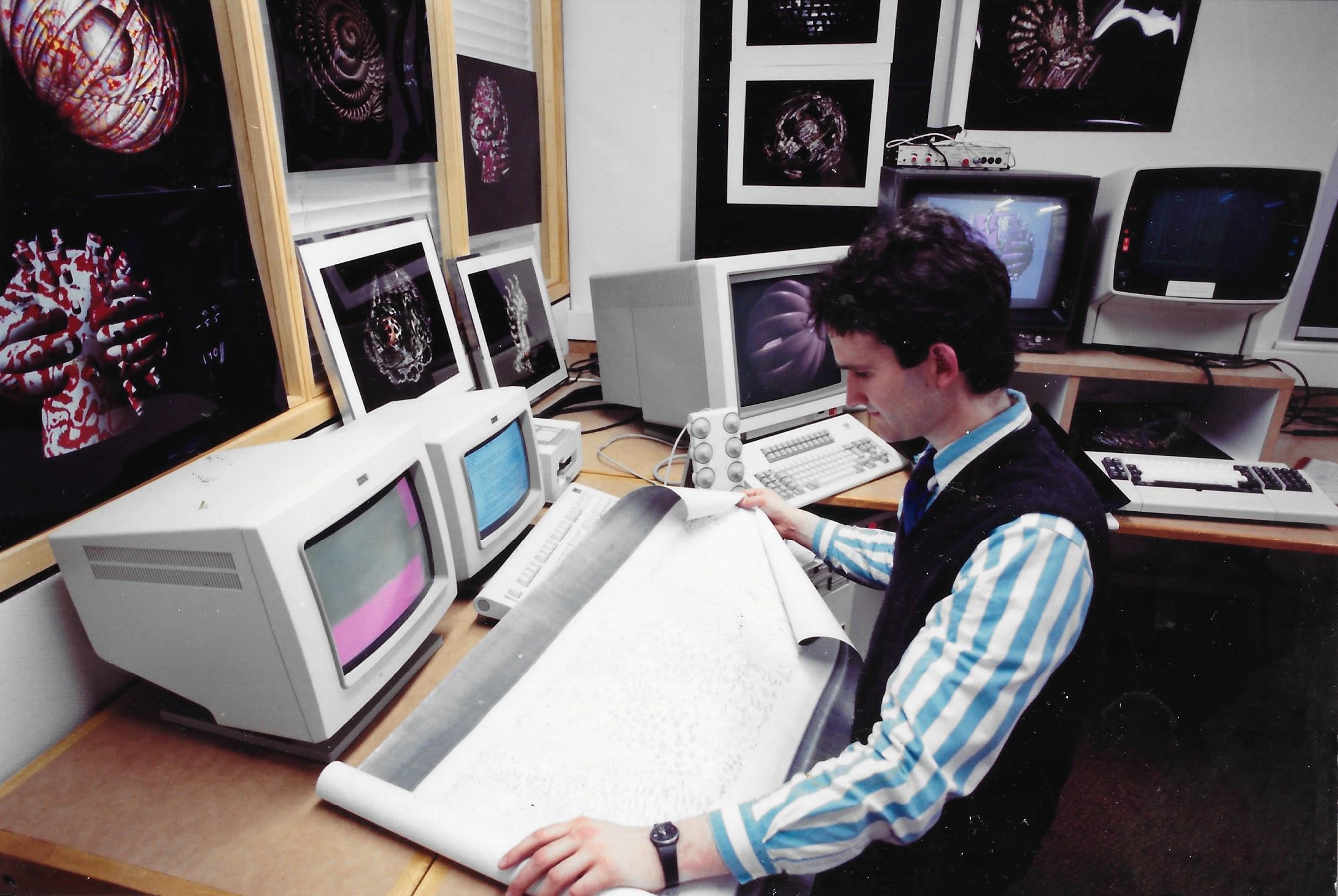
As an artist and research fellow at the IBM UK Scientific Centre, William Latham would first meet Stephen Todd, beginning a life-long collaboration that continues to this day. Their collaboration had foundations in artificial life and would profoundly impact evolutionary art, in many ways the basis for AI art as we know it today. While at IBM with Todd, they developed Mutator and FormGrow…
Biography William Latham. Aug 2023 Gazelli V2 (Courtesy of the artist)
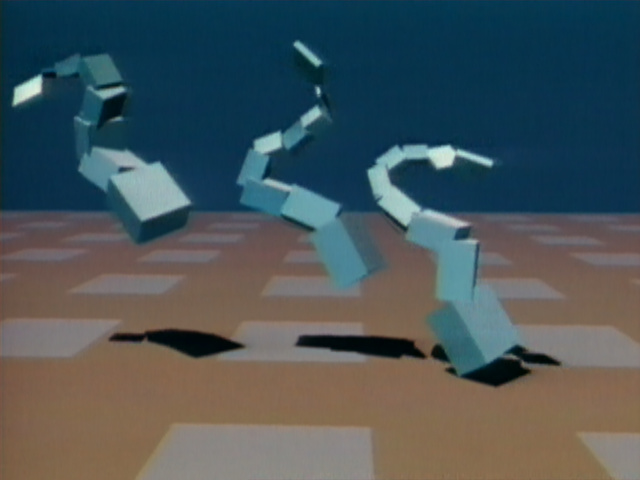
Three evolved swimming creatures from Karl Sims's Evolved Virtual Creatures (1994), from the artist's own page on the work. Karl Sims, Evolved Virtual Creatures, 1994. Courtesy of the artist, karlsims.com.
This is an early example of art built on artificial neural networks, although the networks were evolved by genetic algorithms rather than trained on data. The work stands as one of the most significant links from the rule-based AI of Cohen to “Modern AI art,” relying on the evaluation of trained data. The work showcased the evolution of virtual block creatures through simulated Darwinian…
Described as a “collective intelligence,” this early example of machine learning in art was inspired by the evolutionary art work of Karl Sims. Scott Draves’s software art Electric Sheep is a distributed screen-saver-as-art and pivotal advancement in AI, artificial life and fractal art that originated from the Fractal Flame algorithm. Electric Sheep leveraged a distributed system with a client/server architecture, transforming computer screensavers into…
2012–2015: learned image representations and generation
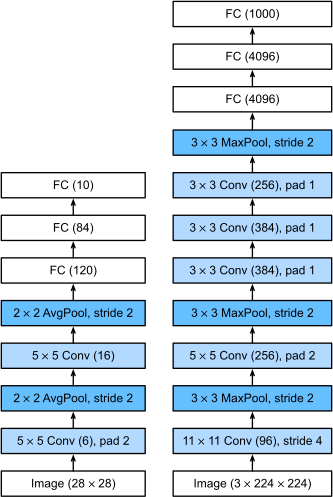
A block diagram of the AlexNet architecture -- the University of Toronto 'SuperVision' network whose stacked convolution and pooling layers won the 2012 ImageNet challenge. Diagram by Aston Zhang, Zachary C. Lipton, Mu Li and Alexander J. Smola (Dive into Deep Learning), CC BY-SA 4.0, via Wikimedia Commons.
Arguably the biggest development in machine learning in decades, deep convolutional neural networks (CNNs or “ConvNets”) revolutionized machine vision. Their power was deployed for the first time relating to creative expression when the SuperVision algorithm from the University of Toronto used CNNs to win the ImageNet Large-Scale Visual Recognition Challenge. Critically, ConvNets were the driving force behind the decade’s upcoming AI developments This paradigm-shifting…
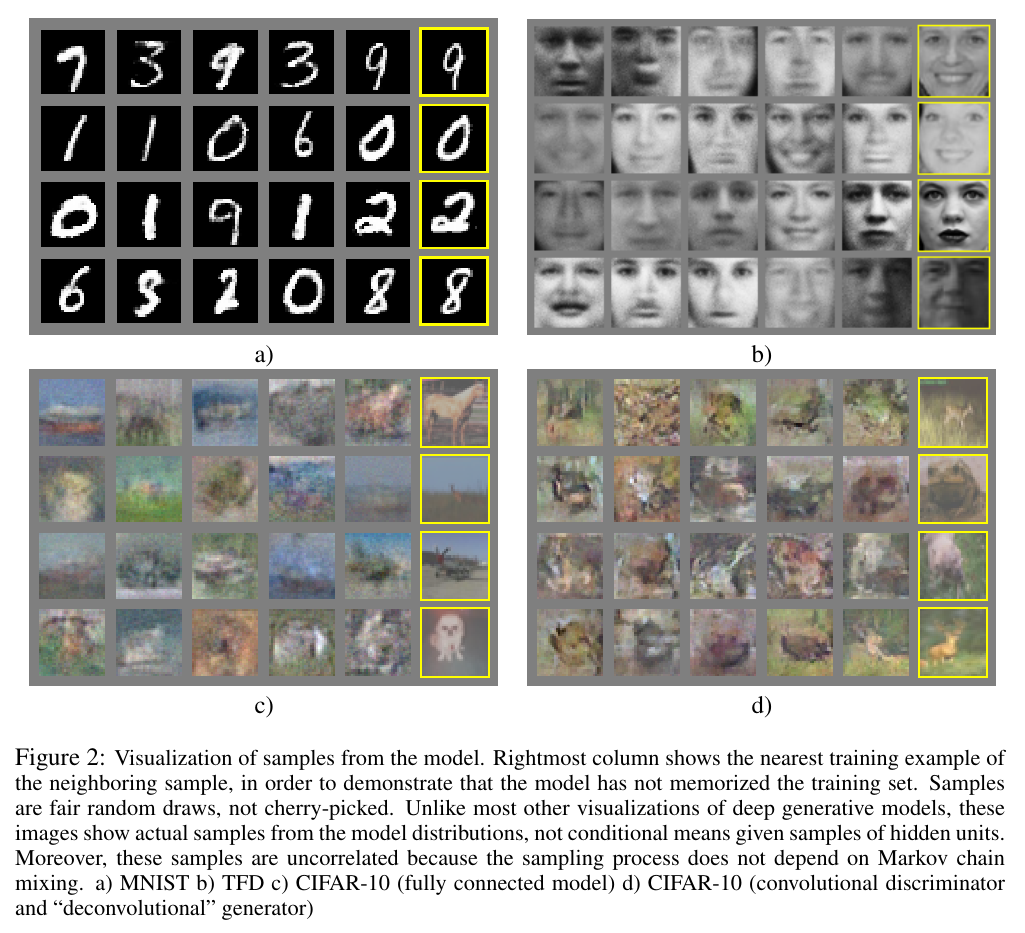
Figure 2 from Generative Adversarial Nets (2014): generated samples for MNIST, TFD and CIFAR-10, with nearest training examples in the rightmost columns. Ian J. Goodfellow, Jean Pouget-Abadie, Mehdi Mirza, Bing Xu, David Warde-Farley, Sherjil Ozair, Aaron Courville and Yoshua Bengio. Figure 2, Generative Adversarial Nets, 2014, p. 6. Source: arXiv:1406.2661. Image source.
In one of this story’s most relevant moments, Ian Goodfellow and his colleagues at the University of Montreal introduced the world to Generative Adversarial Networks (GANs), revolutionizing—and I don’t use the word lightly—the field of machine learning. GANs consist of two models: a generative model that captures the data distribution, and a discriminative model that estimates the likelihood of a sample being from the…
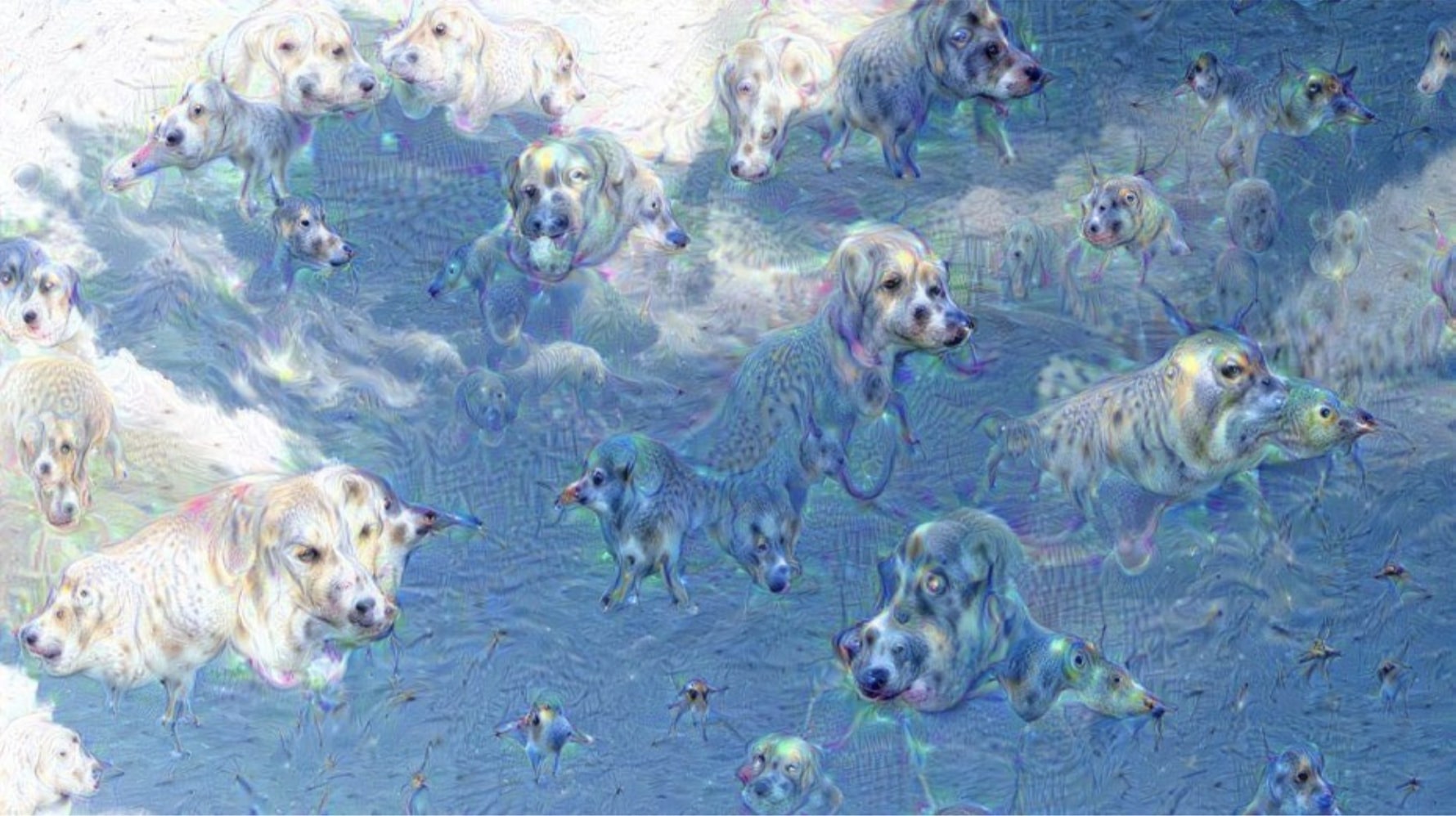
2015 stands as a monumental year in this story—up there with 1965 (digital art’s public beginnings) and 1995 (net.art)—as the year AI art properly took off. GANs had been introduced a year earlier and served as a primary catalyst along with this seminal moment, the launch of Google’s DeepDream. These events ensured 2015’s place in history with important work by AI legends Gene Kogan,…
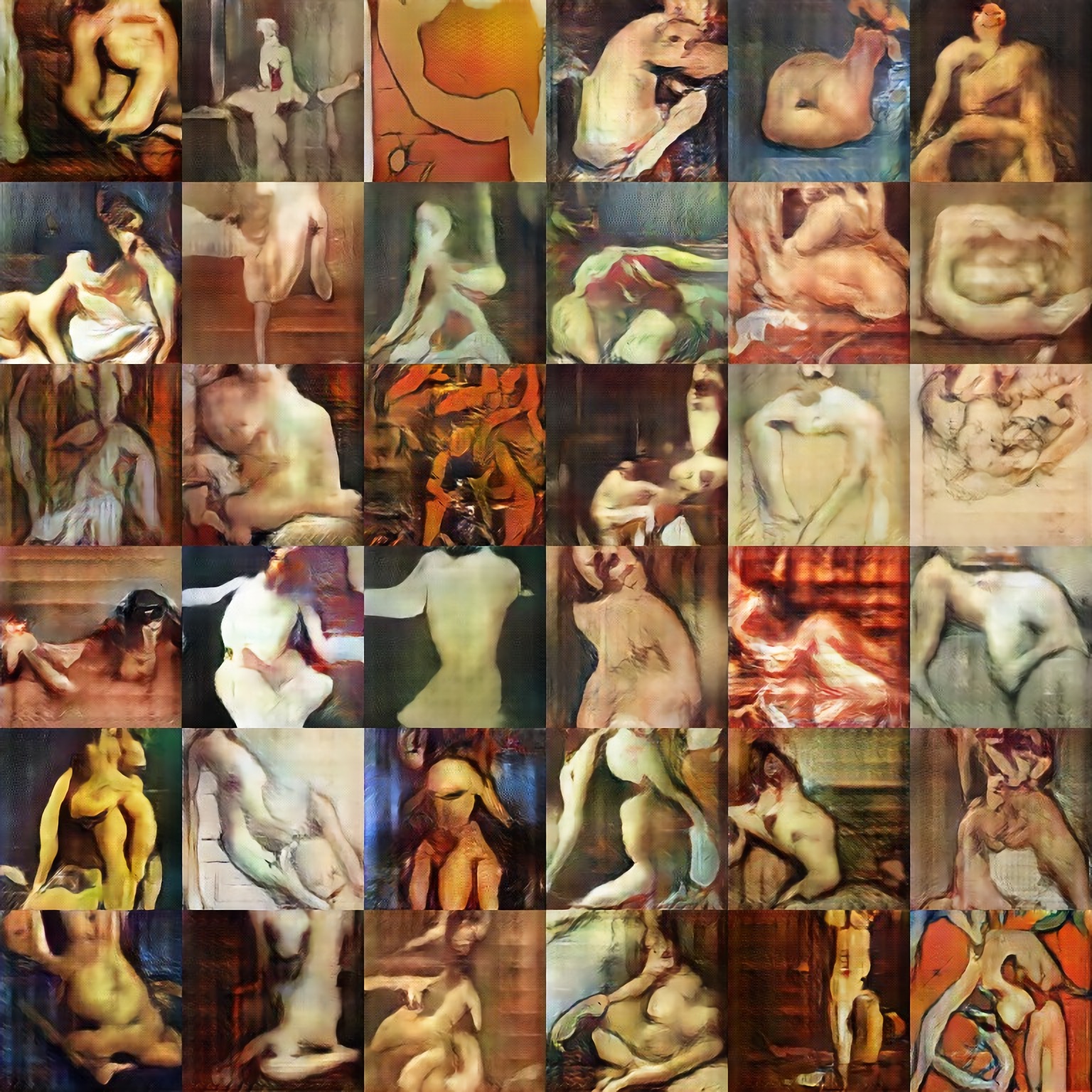
A grid of sample nude portraits generated by Robbie Barrat's nude-portrait GAN, published by the artist in the README of his own art-DCGAN repository. Robbie Barrat, sample output from nude-portrait GAN, art-DCGAN, 2018. Courtesy of the artist, via the artist's GitHub repository.
In 2017 Robbie Barrat began using Generative Adversarial Networks to make art, producing his first two significant bodies of work, Landscapes and Nude Portraits, which reached collectors in 2018. He had begun his explorations of AI in 2016, with a Bach-imitating LSTM in July and a rapping neural network in November. His initial attempt with landscapes yielded realistic but ultimately unremarkable results, highlighting the…
2015–2020s: diffusion and the return to earlier histories
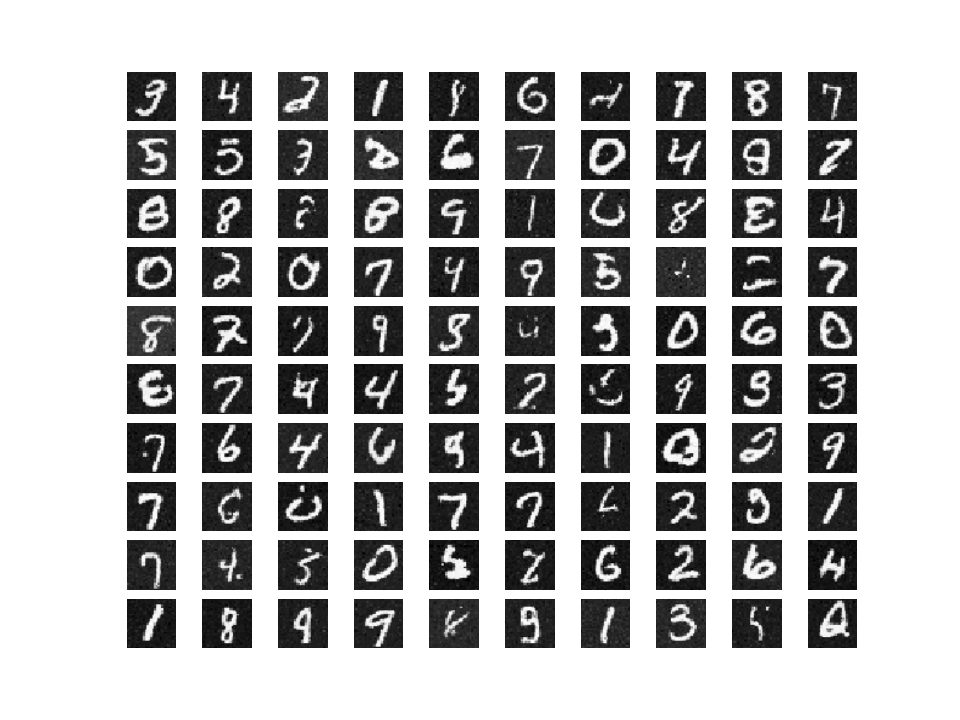
A grid of MNIST handwritten digits generated by the first diffusion probabilistic model -- Figure App.1 of the 2015 paper in which Sohl-Dickstein and colleagues introduced the technique. Figure App.1 from Jascha Sohl-Dickstein, Eric A. Weiss, Niru Maheswaranathan and Surya Ganguli, “Deep Unsupervised Learning using Nonequilibrium Thermodynamics,” arXiv:1503.03585, 2015.
Jascha Sohl-Dickstein, a postdoc at Stanford’s Neural Dynamics and Computation Lab, invented the diffusion model, a massively significant to this day technique in machine learning. Diffusion models are the driving force behind our contemporary text-to-image models. Developed with Eric A. Weiss, Niru Maheswaranathan and the neuroscientist Surya Ganguli, the physics-based model leverages non-equilibrium thermodynamics to reverse the flow of time in a diffusion process.…
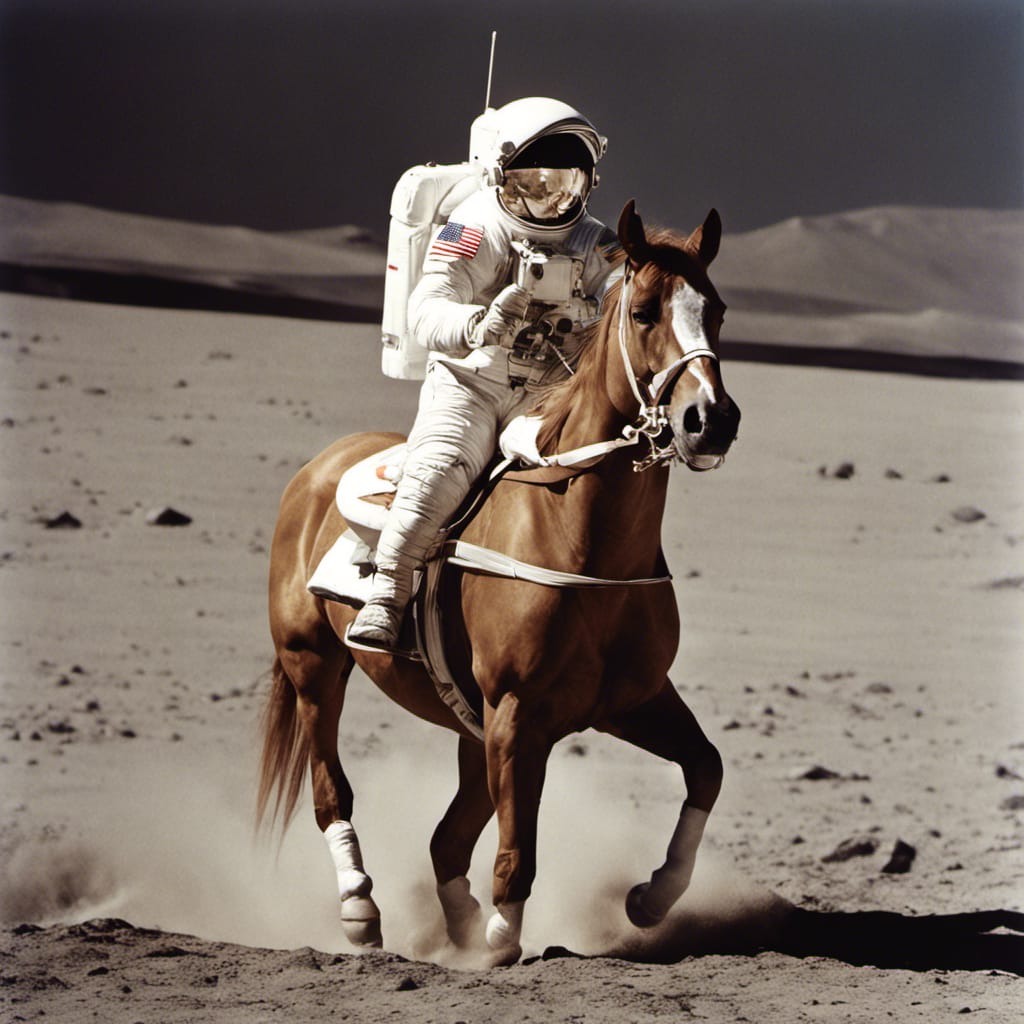
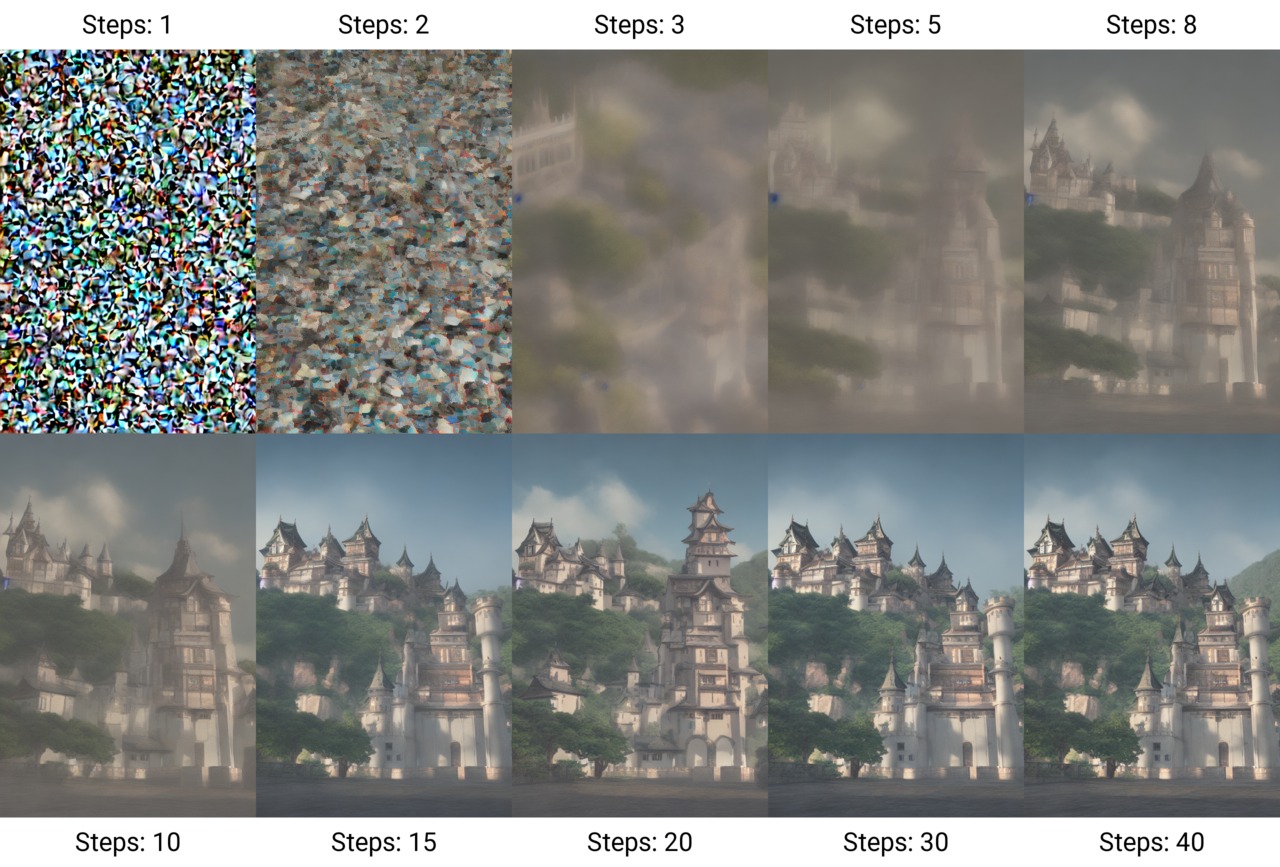
Unlike DALL-E, which generated images autoregressively from discrete image tokens, Latent Diffusion Models (LDMs) operated in latent space and were the step that enabled text-to-image technology to go mainstream. Instead of working directly with pixels like Diffusion Models, LDMs first compress the image into a simpler, lower-dimensional space (called the latent space) using a pre-trained autoencoder. This compressed version of the image retains the…
In August, just a few weeks after the public release of Midjourney, Stability AI publicly released Stable Diffusion, a text-to-image model co-developed with researchers from LMU Munich and Runway ML. The release marked a the third significant text-to-image generative AI model in less than a year. Combined, these models played a significant role is expanding access to creative tools. Stable Diffusion in particular achieved…
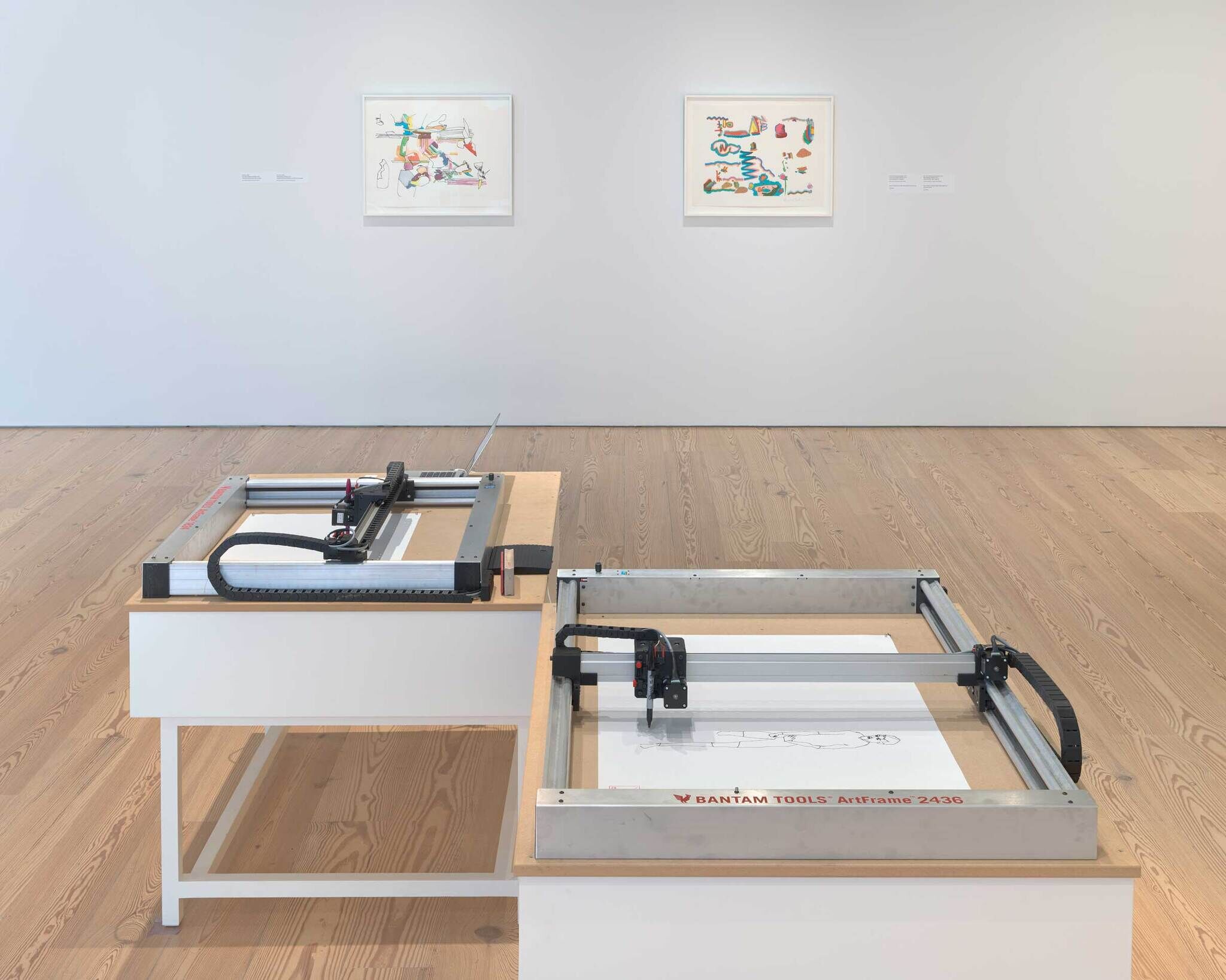
Harold Cohen: AARON, Whitney Museum of American Art, New York, February 3–May 19, 2024. From left: Untitled, 1982; Untitled [Amsterdam Suite], 1978; active plotters drawing images from different periods of the AARON software. Photograph: Ron Amstutz. Plotter fabricated by Bantam Tools; courtesy Bre Pettis. Image: Whitney Museum of American Art. Image source.
Opening just one day after MOMI’s Harvey exhibition, famed curator Christiane Paul’s Harold Cohen: AARON at The Whitney Museum’s looked at another seminal media art pioneer. This author spoke to curator Christiane about the show, which showcased the work of the symbolic AI artmaking program AARON developed by Harold Cohen (1928–2016). Originally conceived in the late 1960s and early 1970s at UC San Diego,…