
Generative Art Timeline · Chapter 6: Personal Computer Era (1980s)
1981
Persepol by David Em
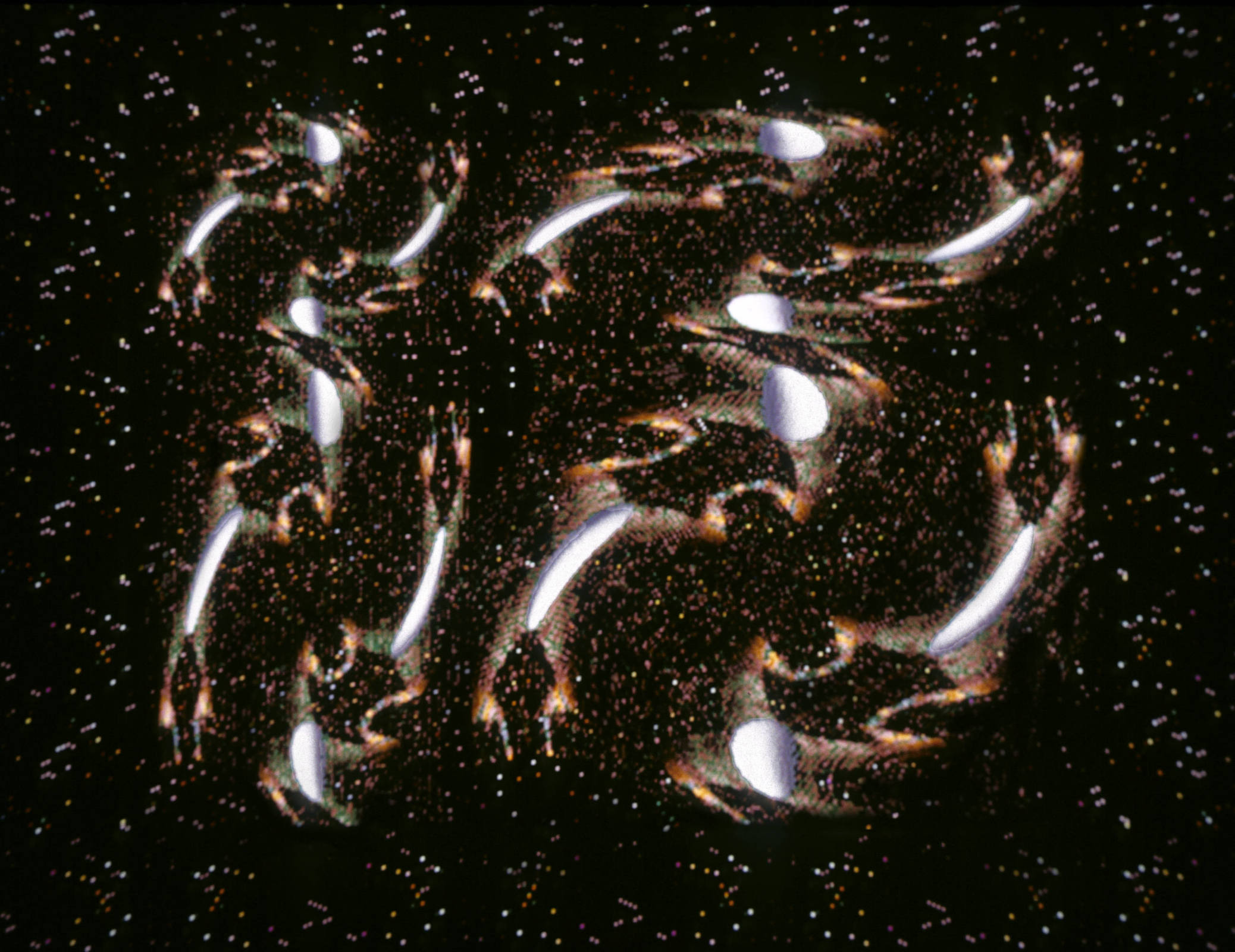
David Em transitioned from traditional painting to computer-generated art in the late ’70s. Experimenting with electronic manipulations of TV images, Em collaborated with computer graphics pioneers at Xerox Palo Alto Research Center (PARC). His pivotal moment came at NASA’s Jet Propulsion Laboratory (JPL), where, as an artist-in-residence, he adapted scientist James Blinn’s visualization software to craft his own unique computer art style. Em’s creations, influenced by the deep space environment, earned him the first-ever artist’s monograph on digital art. Renowned author Ray Bradbury praised Em for wielding technology as a tool, not a threat, marking a transformative period in the evolution of generative art.
Text by Peter Bauman. Generative Art Timeline, Le Random.
Sources
People
David Em, Jim Blinn, Ray Bradbury
Movements
computer art
Filed under
- Ideas
- artist residency, digital art, generative art
- Technologies
- computer art, computer graphics
- People
- David Em, Jim Blinn, Ray Bradbury
- Works
- Persepol
- Organisations
- NASA, NASA Jet Propulsion Laboratory (JPL), Xerox PARC
- Places
- Palo Alto
Echoes across time
- 1968 · The machine, as seen at the end of the mechanical age at MoMA
- 1963 · Military Agencies Create Early Computer-Generated Art
- 2004 · Pitch and Volume by Anna Ursyn
Related moments
Le Random editorials
- Casey Reas on the History of Generative Art - Part 2, Peter Bauman, July 5, 2023
Le Random podcast
- Timeline Ch 6—Personal Computer Era (1980s) with Mark Wilson, Copper Giloth, Dan Sandin, David Em, William Latham, Stephen Todd, Darcy Gerbarg & Geoff Davis — listen with transcript on Le Random (08 Feb 2024, 85 min). Featuring David Em. Chapter 6’s episode. Apple Podcasts · Spotify
- Digital Curators Series 01—Douglas Dodds on Collecting and Valuing Emerging Technologies — listen with transcript on Le Random (30 Sep 2024, 49 min). Transcript mentions David Em. Apple Podcasts · Spotify