Generative Art Before Computers: The Pre-Modern Era
Spanning tens of thousands of years, we begin by surveying the advancements in art, mathematics, science and computing history that led to the modern era of generative art.
From Le Random’s Generative Art Timeline. Original moment texts by Peter Bauman.
Pattern as a procedure
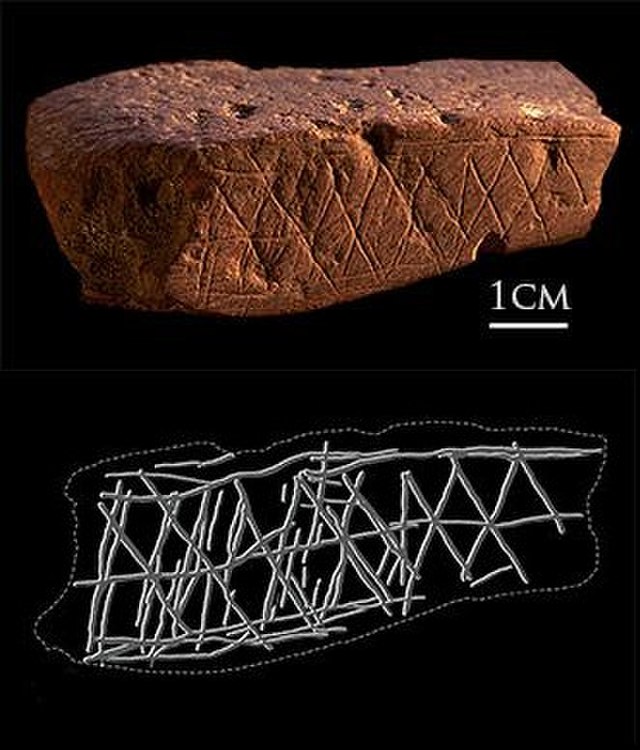
Blombos Cave Drawing Ochre stone with cross-hatched pattern, Blombos Cave, South Africa, ca. 70,000 years ago. Image by Chris S. Henshilwood, via Wikimedia Commons (CC BY-SA 4.0). Image source
The earliest known drawing made by humans is generative. Ochre cross-hatching found at Blombos Cave in South Africa is the earliest known drawing yet found anywhere. “They qualify as generative because the placement of individual marks has not been decided by the artisan, but dictated by a manually executed symmetry‐based algorithm,” according to Philip Galanter. Casey Reas has spoken of how logical, systems thinking…
Paul, Christiane. A Companion to Digital Art, 159. John Wiley & Sons Inc, 2019.
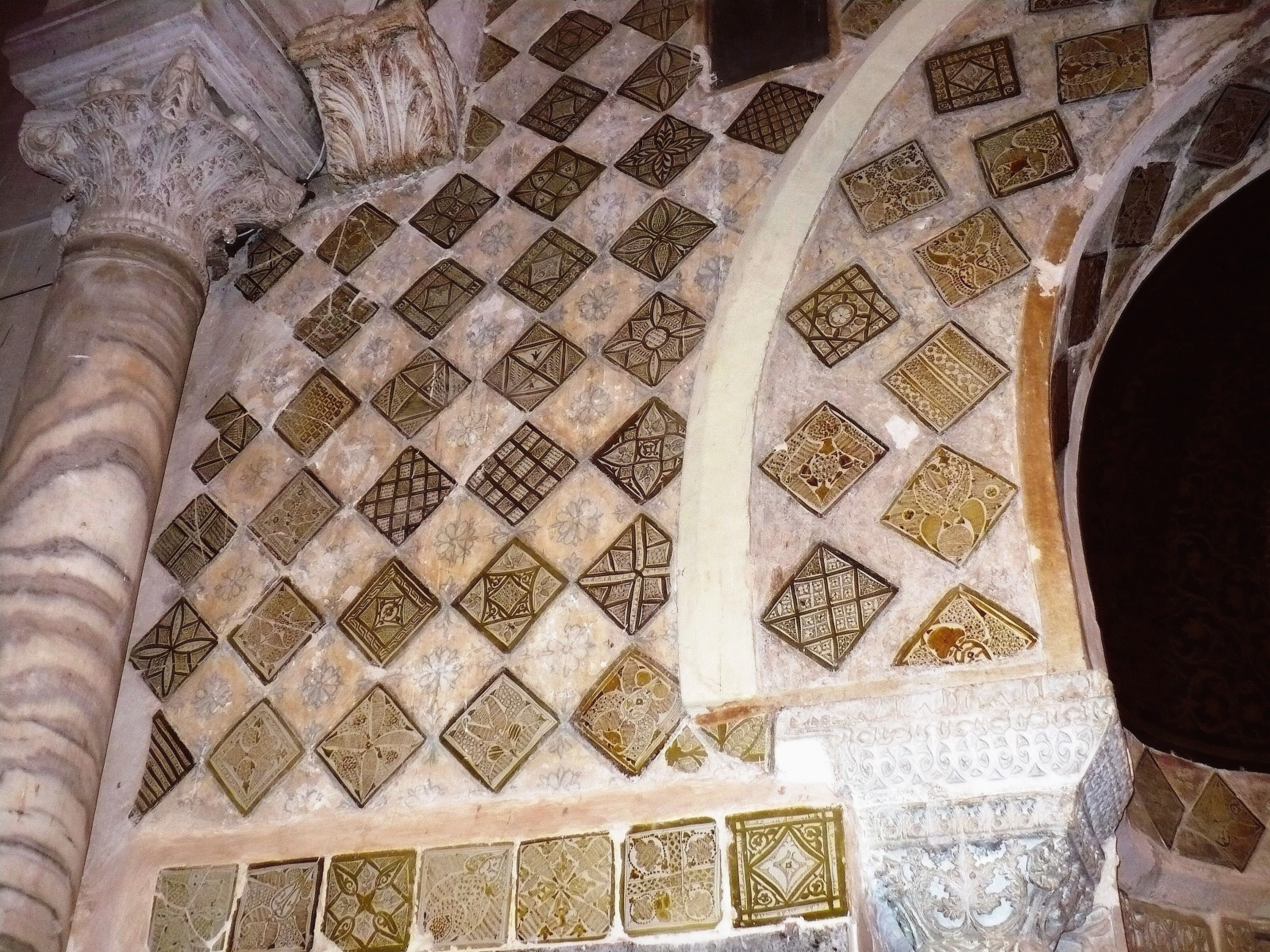
Lustre tiles around the mihrab, Great Mosque of Kairouan, Tunisia, 9th century. Photograph by tai_mab, 2009, via Wikimedia Commons (CC BY-SA 2.0). Image source
Islamic geometric patterns, emerged in the 8th century during the Islamic Golden Age, influenced by Greek, Roman and Sasanian Persian mathematics and ornament. An example of a generative process predating the computer, Islamic artists used these complex geometric shapes to create intricate, symmetrical designs that were used to decorate buildings, manuscripts, textiles, and other objects.
Johann Philipp Kirnberger, Der allezeit fertige Polonoisen- und Menuettencomponist, title page of the 1757 printing, Berlin: George Ludewig Winter; in this Munich copy the date has been altered by hand to read 1767. Johann Philipp Kirnberger / George Ludewig Winter. Bavarian State Library copy, reproduced via Wikimedia Commons; scan photographer unidentified. Image source.
Known as Musikalisches Würfelspiel (“musical dice game”), this method first published by Johann Philipp Kirnberger was a monumental event in the history of art and chance. The game was a musical composition technique in which pre-composed measures were selected by rolls of dice. Serving as one of the earliest examples of aleatoric (chance) music, it stands as one of the earliest examples generally of…
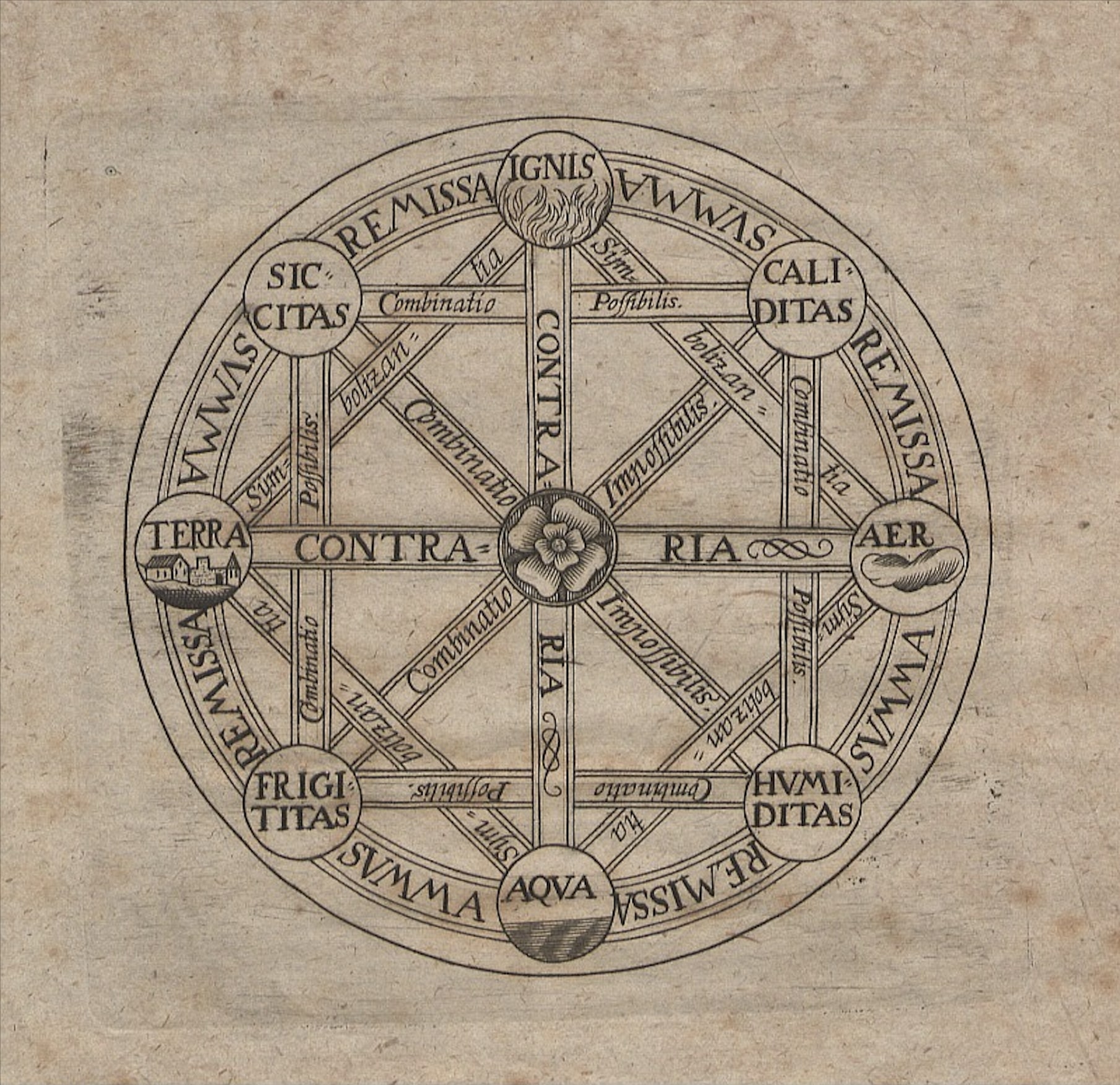
Leibniz, diagram of the four elements and their qualities, from Dissertatio de arte combinatoria, 1666. Via Wikimedia Commons (public domain). Image source
Leibniz’s Dissertatio de arte combinatoria (“On the Combinatorial Art” 1666) was one of several cornerstone papers he would write throughout his life on concepts such as symbols, binary systems and formal logic. His voluminous writing and tinkering with machines would prove hugely influential to the development of computing. “On the Combinatorial Art” expanded his habilitation thesis at Leipzig. In it, he proposed a system…
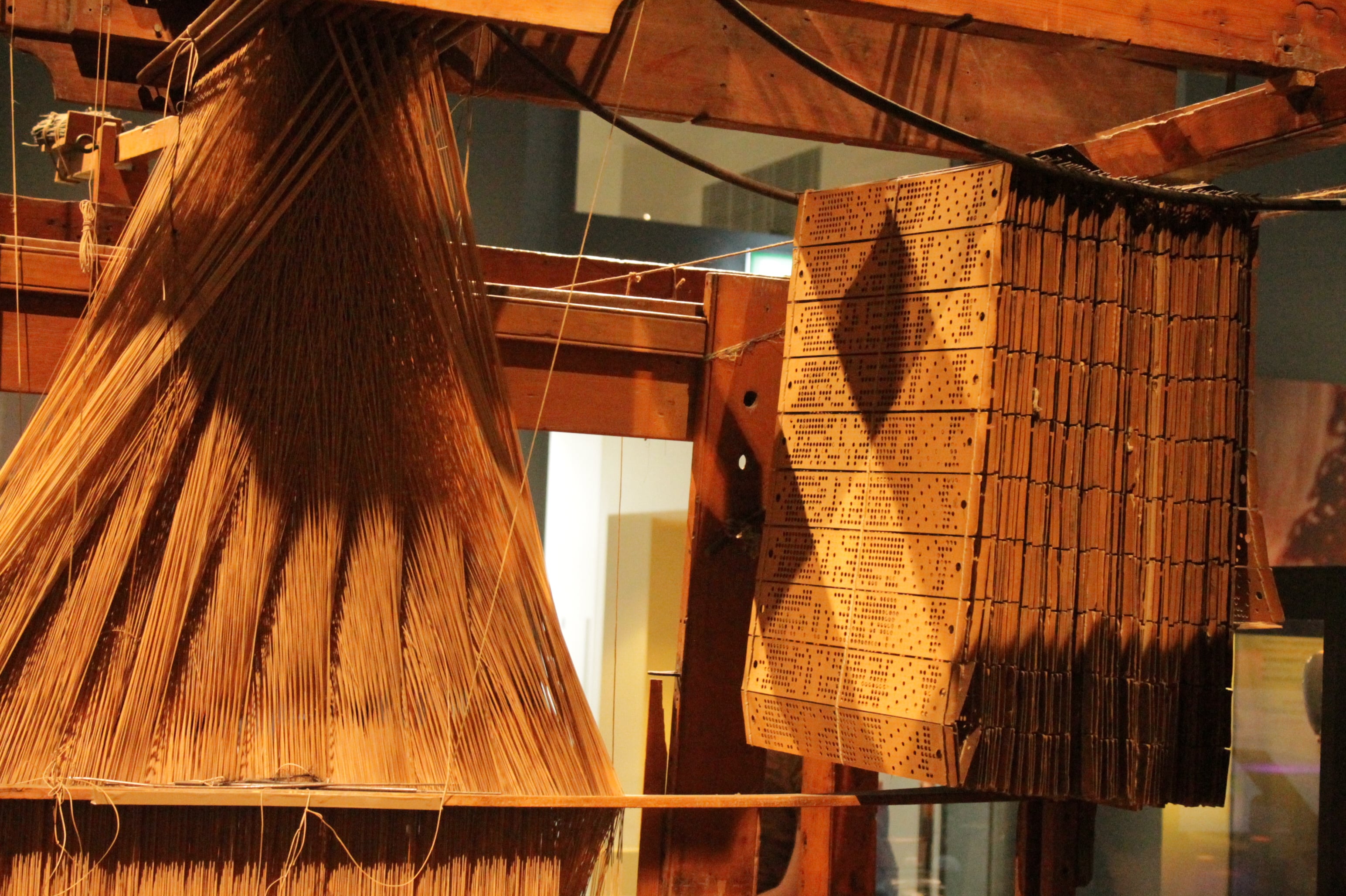
Jacquard loom with punched cards, National Museum of Scotland, Edinburgh. Photograph by Stephencdickson, 2019, via Wikimedia Commons (CC BY-SA 4.0). Image source
The Jacquard loom used punch cards to control the weaving of patterns in fabric. It introduced the notion of a program stored outside the machine on punch cards, which would later result in generative weaving and modern computing. Charles Babbage would go on to utilize Jacquard’s method of punch card programming as one of computing’s earliest pioneers. “Computers did not pave the way for…
Paul, Christiane. A Companion to Digital Art, 151. John Wiley & Sons Inc, 2019.
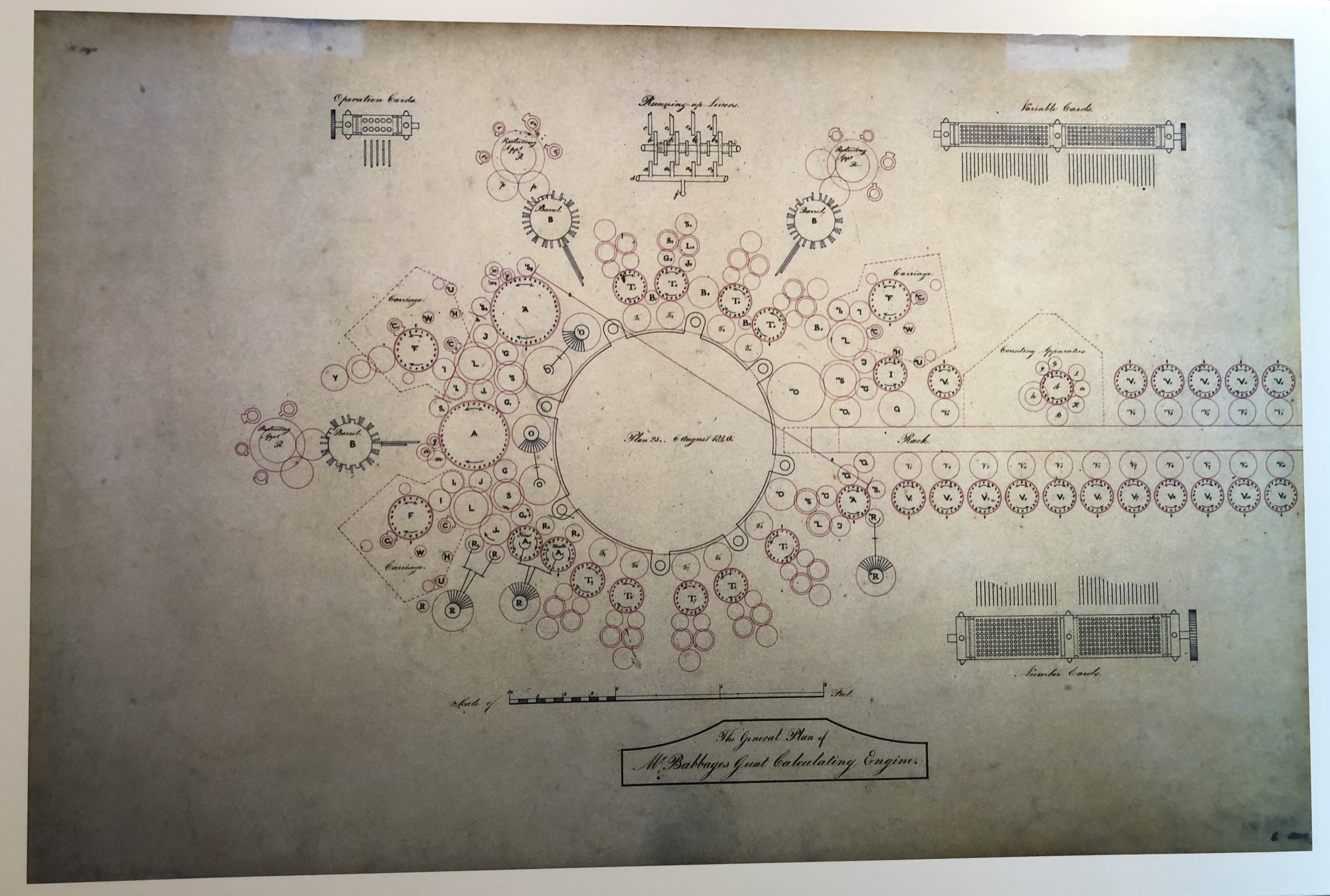
Charles Babbage, General plan of the Analytical Engine (Plan 25), 6 August 1840, as displayed at the Computer History Museum. Photograph by Arnold Reinhold, 2018, via Wikimedia Commons (CC BY 4.0). Image source
Foundational to the development of cybernetics, this unrealized mechanical computer aimed to use punch cards, inspired by the Jacquard Loom, to perform calculations. One of the earliest designs for a programmable computer, it also had a significant impact on the development of modern computers and programming languages.
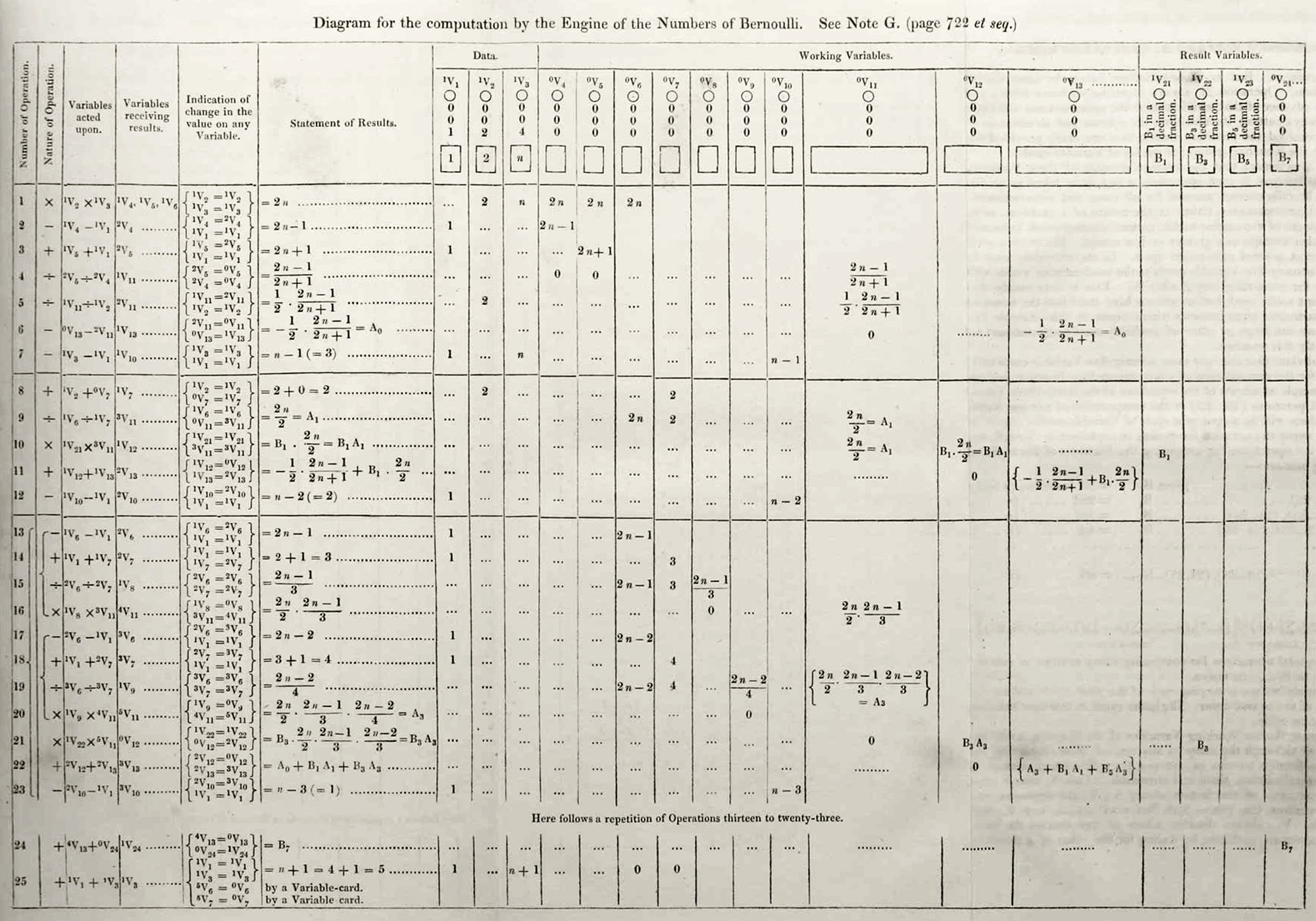
Diagram for the computation by the Engine of the Numbers of Bernoulli (Note G), from Ada Lovelace's translation and notes to L. F. Menabrea, Sketch of the Analytical Engine invented by Charles Babbage, Taylor's Scientific Memoirs, vol. 3, 1843. Via Wikimedia Commons (public domain). Image source
Computer programming is born, as Ada Lovelace’s 1843 notes on Charles Babbage’s Analytical Engine set out a program for computing Bernoulli numbers, making her the first published computer programmer. Her work demonstrated the potential for computers to perform complex tasks, foreshadowing the development of modern programming languages. She even envisioned the computer’s ability to create programmed art. Inspired by the notion of combining science…