Generative art has a history of procedures as well as pictures. Artists have worked with rules, chance, machines, code and physical processes to make forms that emerge through a system. Le Random’s timeline follows those practices alongside the mathematical, technological and institutional histories that help explain them.
This guide offers a route through the archive’s ten chapters. The early entries explore precedents interpreted through a generative lens; later chapters follow named artists, works, tools and exhibitions. Each selected moment opens into its historical text and sources.
From Le Random’s Generative Art Timeline. Original moment texts by Peter Bauman.
Before computers: patterns and delegated decisions
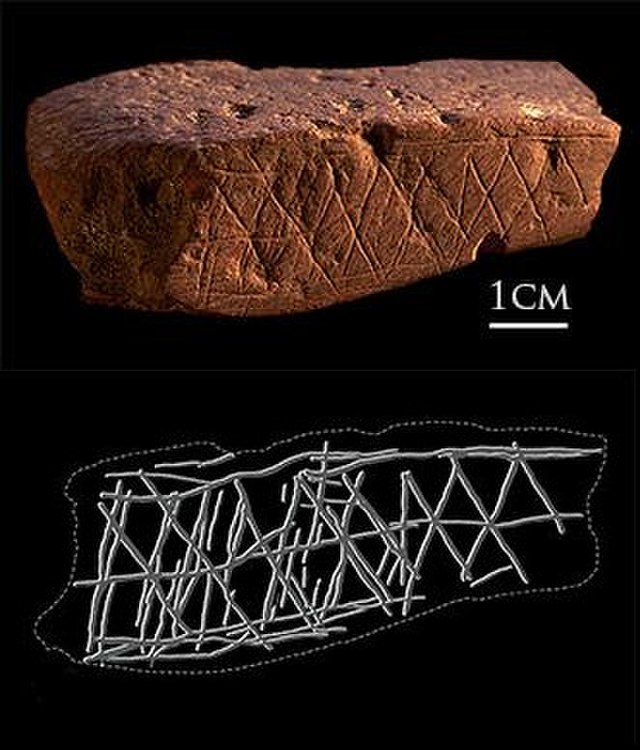
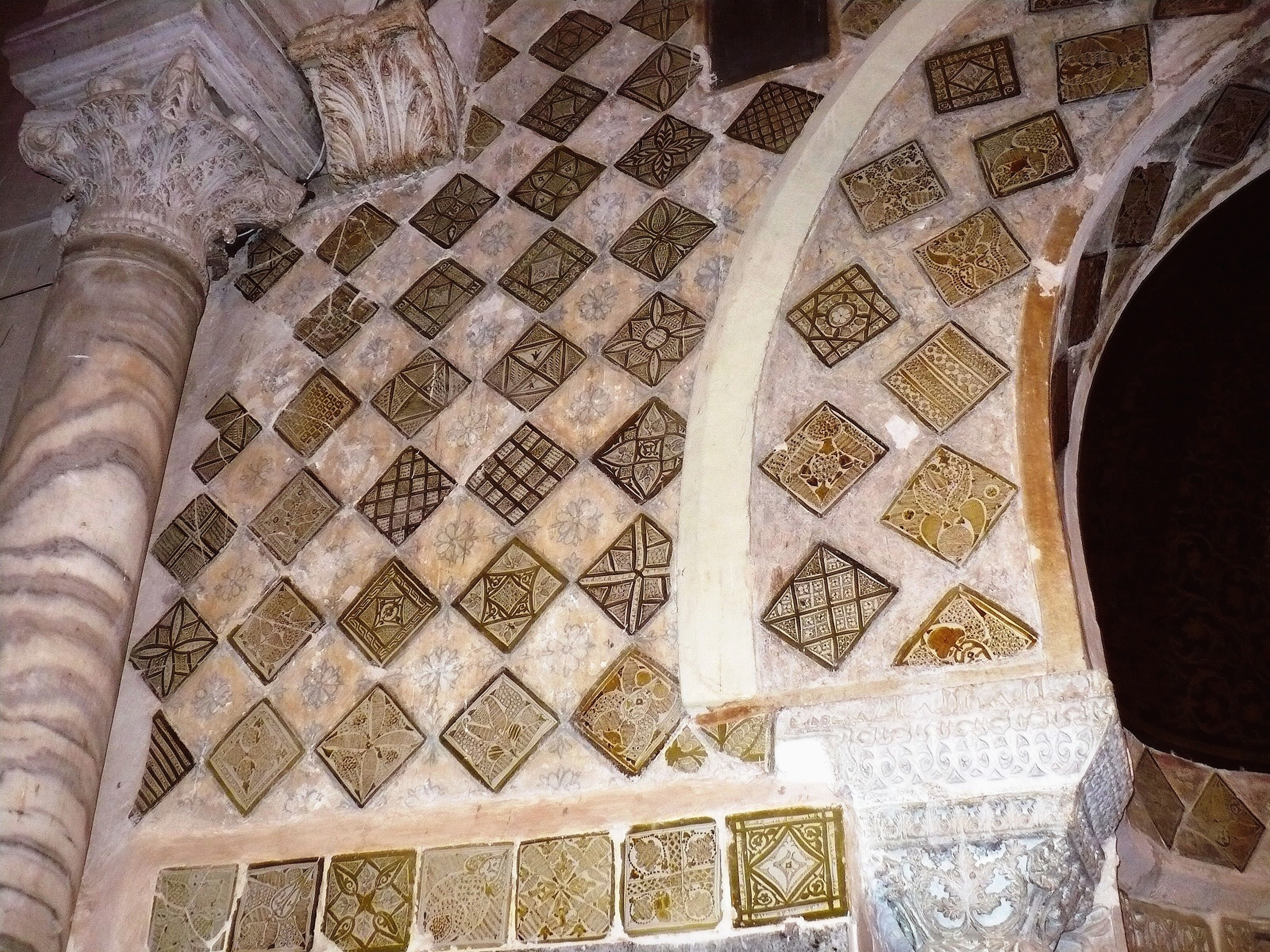
The archive’s broad starting point asks how far a history of systems in art can reach. Blombos Cave introduces a debated interpretation of patterned marks; Islamic geometric art develops a more complex example of rule-based construction. In music, Kirnberger’s dice game delegates the selection of prepared measures to chance. These are different relationships between maker and procedure, providing historical context without assigning a modern identity to their makers.
The earliest known drawing made by humans is generative. Ochre cross-hatching found at Blombos Cave in South Africa is the earliest known drawing yet found anywhere. “They qualify as generative because the placement of individual marks has not been decided by the artisan, but dictated by a manually executed symmetry‐based algorithm,” according to Philip Galanter. Casey Reas has spoken of how logical, systems thinking…
Islamic geometric patterns, emerged in the 8th century during the Islamic Golden Age, influenced by Greek, Roman and Sasanian Persian mathematics and ornament. An example of a generative process predating the computer, Islamic artists used these complex geometric shapes to create intricate, symmetrical designs that were used to decorate buildings, manuscripts, textiles, and other objects.
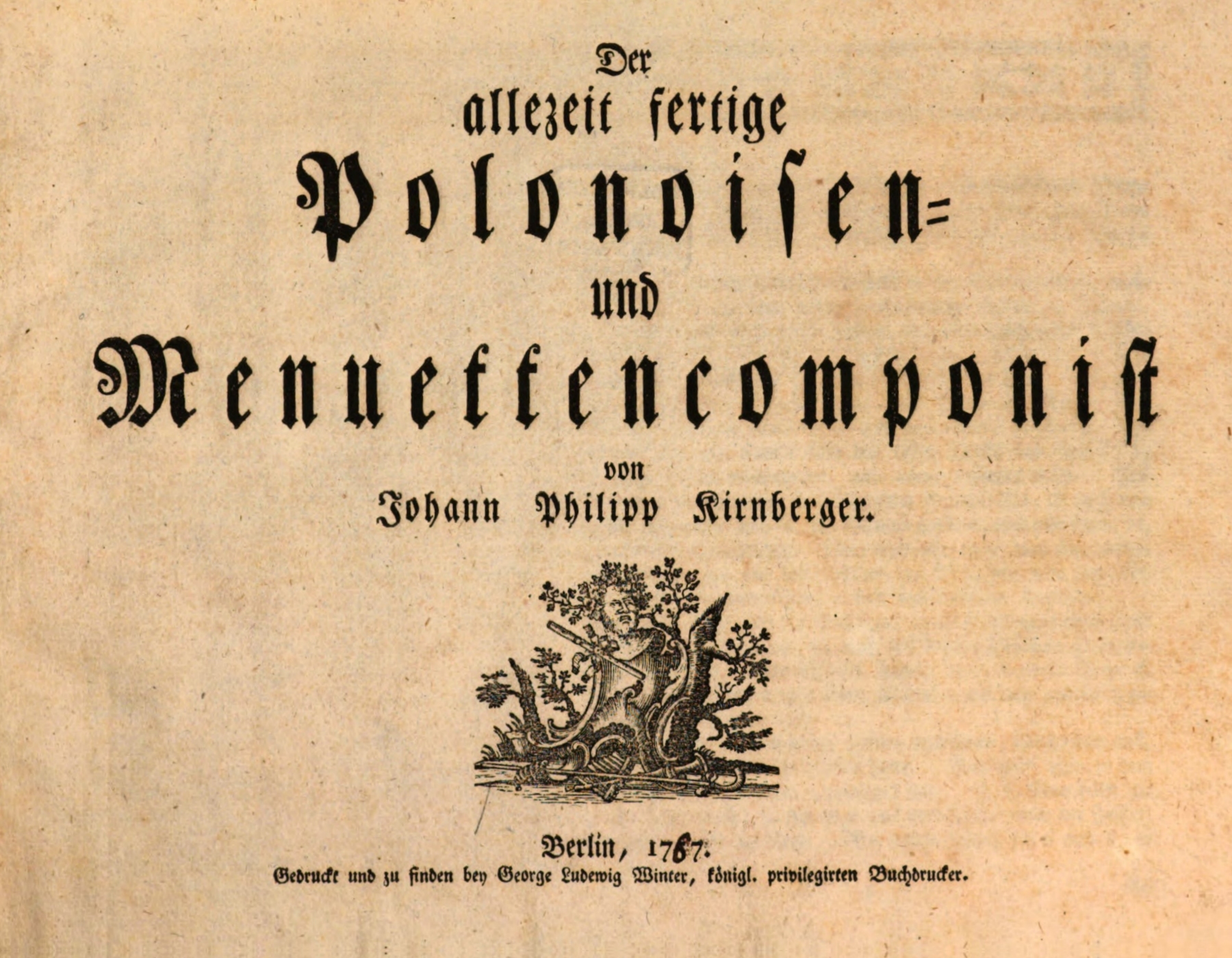
Johann Philipp Kirnberger, Der allezeit fertige Polonoisen- und Menuettencomponist, title page of the 1767 printing, Berlin: George Ludewig Winter. The work was first published in 1757. Johann Philipp Kirnberger / George Ludewig Winter. Bavarian State Library copy, reproduced via Wikimedia Commons; scan photographer unidentified. Image source.
Known as Musikalisches Würfelspiel (“musical dice game”), this method first published by Johann Philipp Kirnberger was a monumental event in the history of art and chance. The game was a musical composition technique in which pre-composed measures were selected by rolls of dice. Serving as one of the earliest examples of aleatoric (chance) music, it stands as one of the earliest examples generally of…
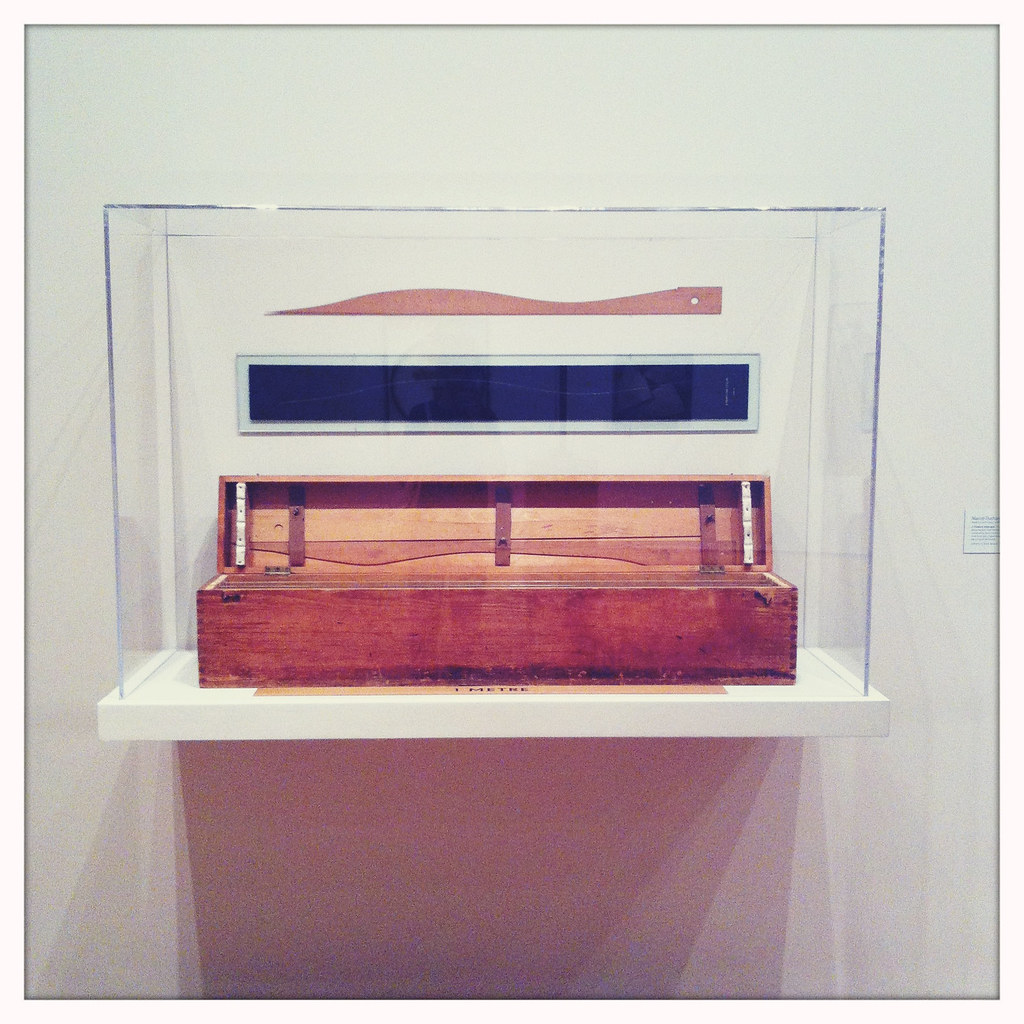
Duchamp’s 3 Standard Stoppages preserves shapes made by dropped threads. Decades later, Molnár’s machine imaginaire explores combinations as if a computer were available. Alongside them, Bute’s Abstronic reveals an electronic route into visual experimentation. Read together, these entries show why a history of generative art moves between chance, systematic composition and equipment rather than beginning with one invention.
This revolutionary work of 1913 and 1914 remains one of the most famous examples of the use of chance in the history of art. Duchamp employed chance operations by dropping three one-meter threads, allowing them to take on random forms. He then traced and mounted these shapes as a commentary on the limitations of standard measurement systems. Duchamp’s exploration of chance and random processes…
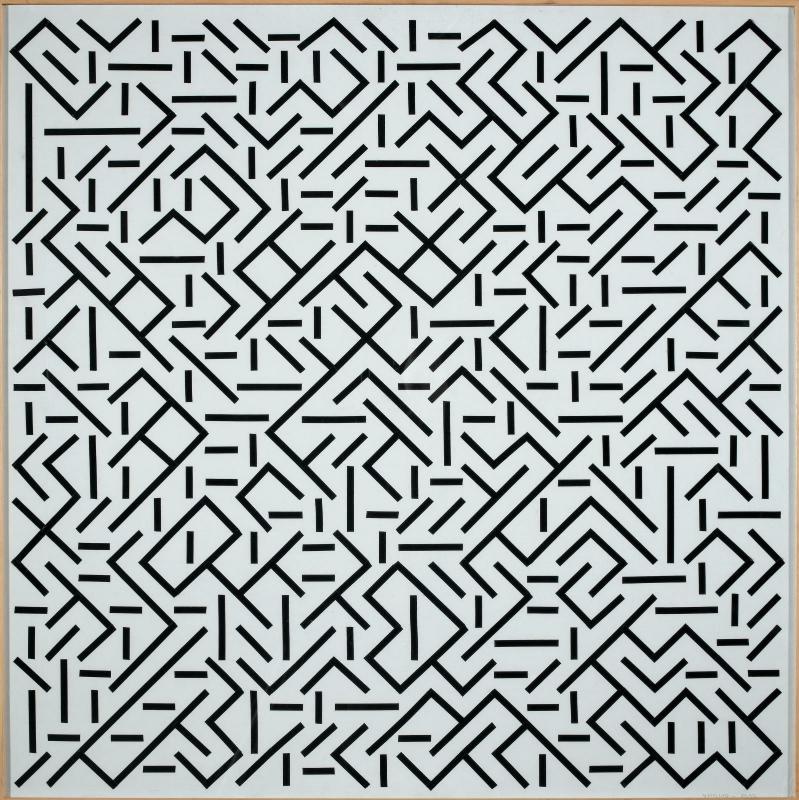
Meaning the “imaginary computer,” Molnár’s “machine imaginaire” is the now famous concept that she developed to imagine a computer to expand her creative process. The hypothetical machine allowed her to systematically create works that included all the possible combinations of forms she wished. Now based in Paris, It would take nearly another decade, 1968, before Molnár would gain access to an actual computer.
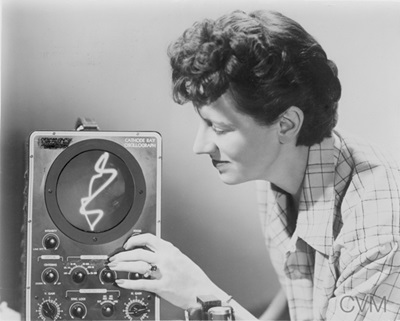
Mary Ellen Bute observing an image on the oscilloscope screen whose knobs and switches she used to “draw with a beam of light” for Abstronic (1952). Mary Ellen Bute / Ted Nemeth. Collection of Center for Visual Music, Los Angeles.
Pioneering work of abstract electronic animation Using an oscilloscope, Bute was the creator of some of the earliest electronically generated images. In 1952, she created the landmark experimental film Abstronic, (a portmanteau of the words “abstract” and “electronic”). Her abstract animations anticipated the upcoming aesthetic language of computer art by incorporating Lissajous curves and geometric abstraction. Bute was captivated by the proposition of drawing…
The 1965 Georg Nees exhibition and Computer-Generated Pictures establish specific public presentations of digital graphics. Cybernetic Serendipity then places computer-generated images in a wider field of music, film, machines and feedback. The chapter articles follow both the artworks and the settings that brought them to audiences. A. Michael Noll’s recollection supplies a practitioner’s account of the early period.
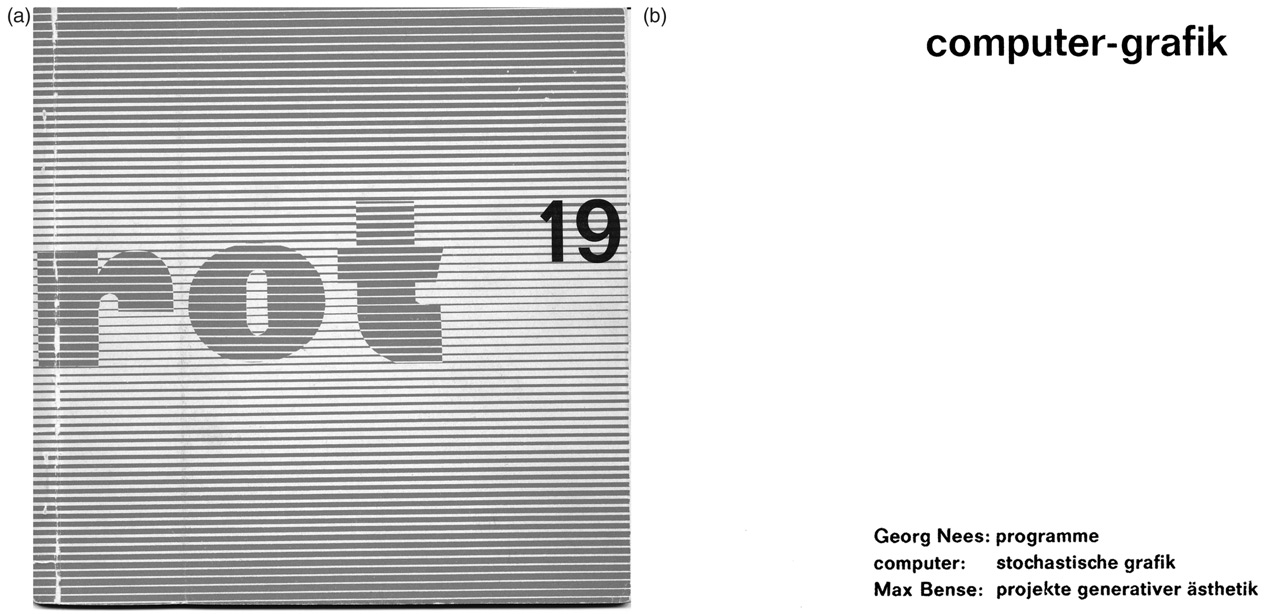
Cover and title page of rot 19: computer-grafik, the booklet accompanying Georg Nees’s Stuttgart exhibition, 1965. Georg Nees and Max Bense; rot series edited by Max Bense and Elisabeth Walther. Reproduction in Frieder Nake, Information Aesthetics: An heroic experiment (2012), figure 1, p. 70. Image source.
Opening 4 February and running from the 5th to the 19th, Computergrafik was the first of the three 1965 computer art exhibitions globally. Invited by Max Bense to show the graphical work Georg Nees had been working on, Computergrafik was held in the Studiengalerie of the Technische Hochschule Stuttgart. Nees was the only artist on display. The February exhibit was the first gallery exhibition…
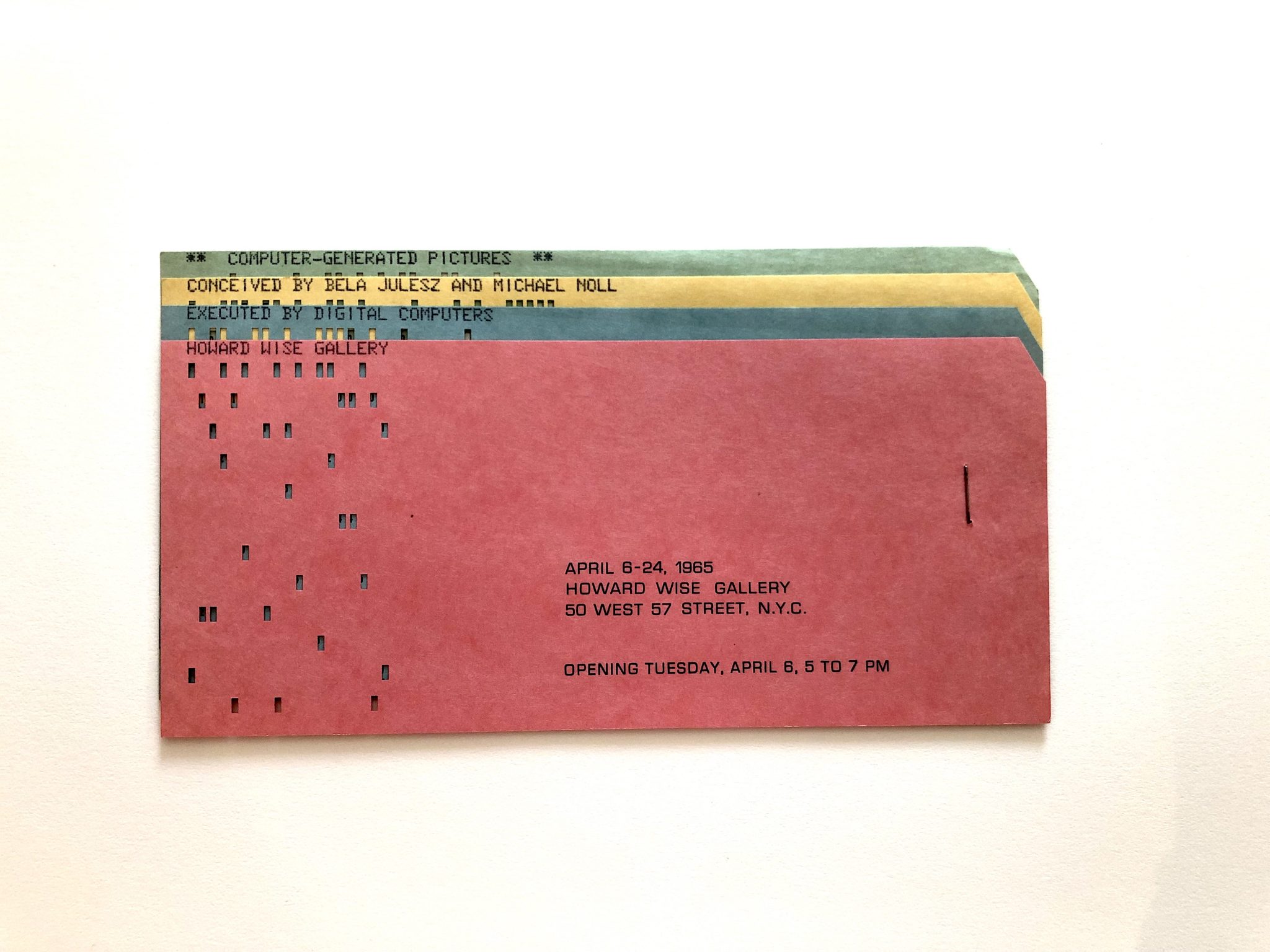
On display in April 1965, the legendary Computer-Generated Pictures introduced computer art to the broader public, especially in the United States. The second of the three computer art exhibitions of 1965, Computer-Generated Pictures was the first in North America and the first held in a commercial gallery. The show was held by artist-researchers A. Michael Noll and Béla Julesz spanning several years of their…
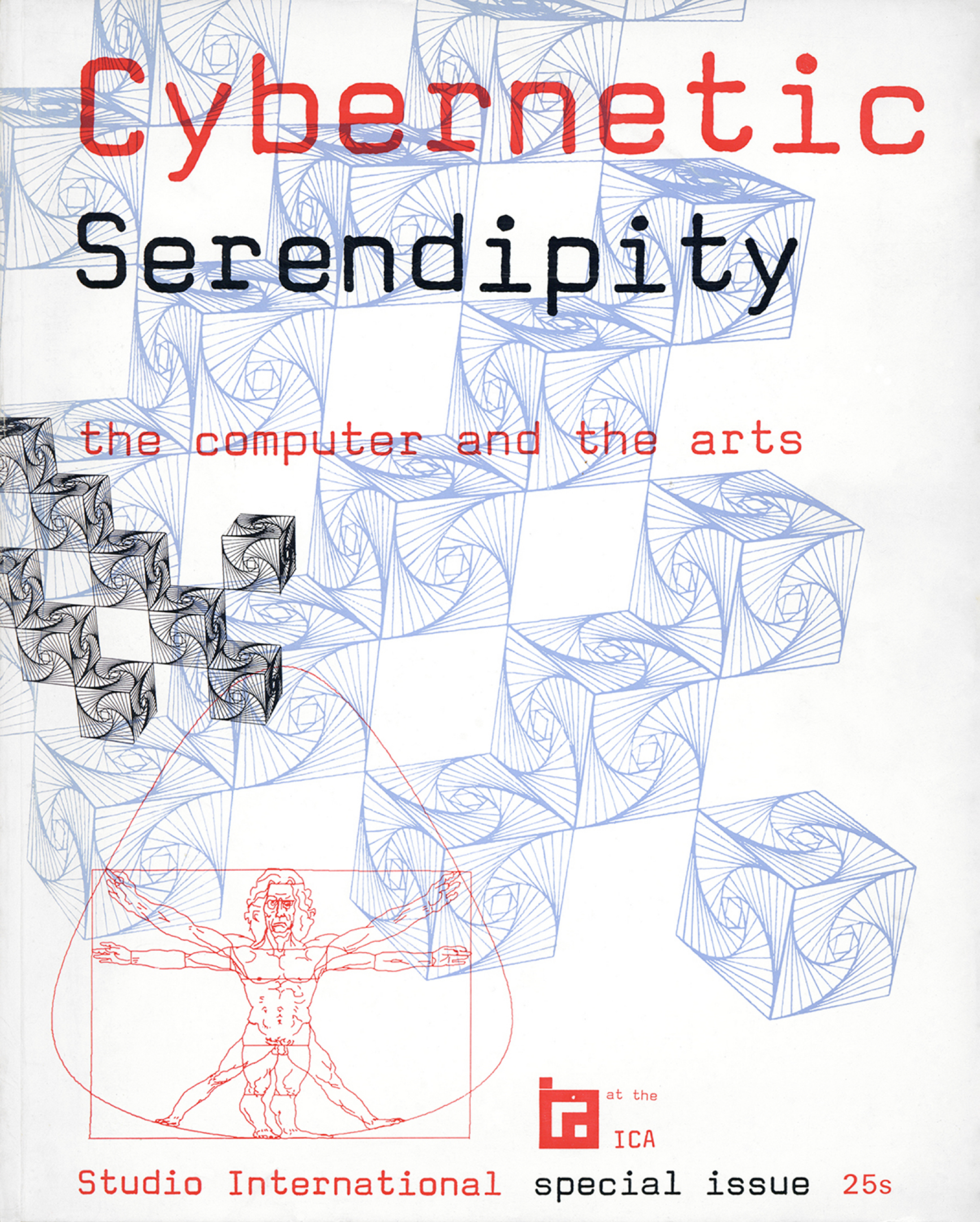
Cybernetic Serendipity, Jasia Reichardt’s landmark international exhibition at the Institute of Contemporary Arts, London, ran from 2 August to 20 October 1968 and was computer art’s first international exhibition. But it was also so much more than that. With cybernetic theory (Cybernetics Is Born) as an overarching theme, the exhibition probed the relationship between creativity and technology. It “aroused world-wide interest for computer art…
In the 1970s, Harold Cohen’s AARON pursued autonomous drawing while Sonia Landy Sheridan’s Generative Systems program explored technologies through teaching and experimentation. Personal computers and the web changed where such work could be made and shared. By 2001, Processing joined artistic practice with an open-source learning environment. Follow the intervening chapters for video synthesis, multimedia, net.art and artificial life.
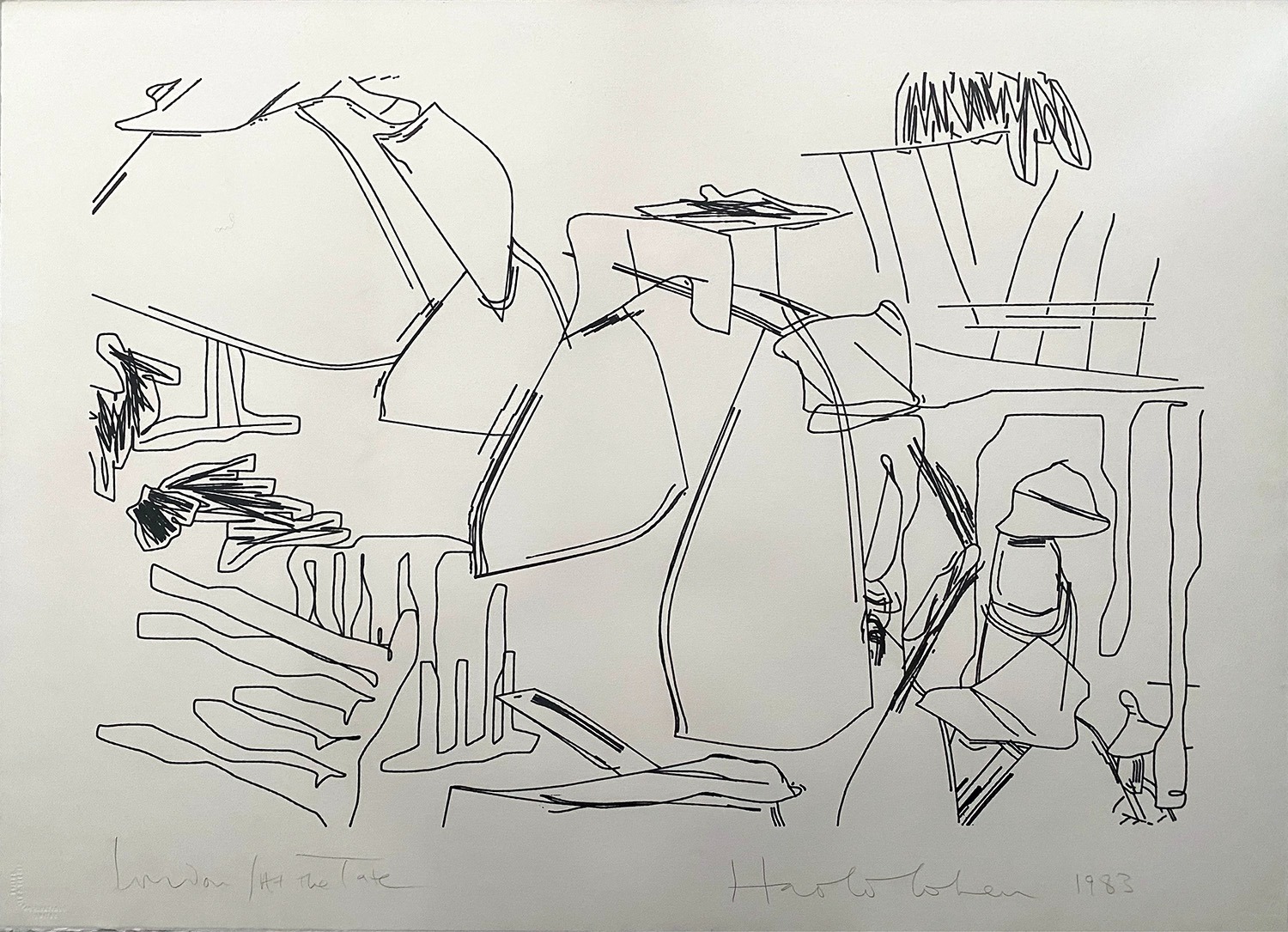
AARON, the autonomous drawing machine Cohen named at Stanford in 1973, pioneered the use of AI to create art. With his seminal 1973 essay “Parallel to Perception: Some Notes on the Problem of Machine-Generated Art,” Harold Cohen articulated his efforts to develop “autonomous art-making behavior” that was inventive and could “conjure meaning.” Cohen differentiated this “autonomous art-making” from computer art, which he did not…
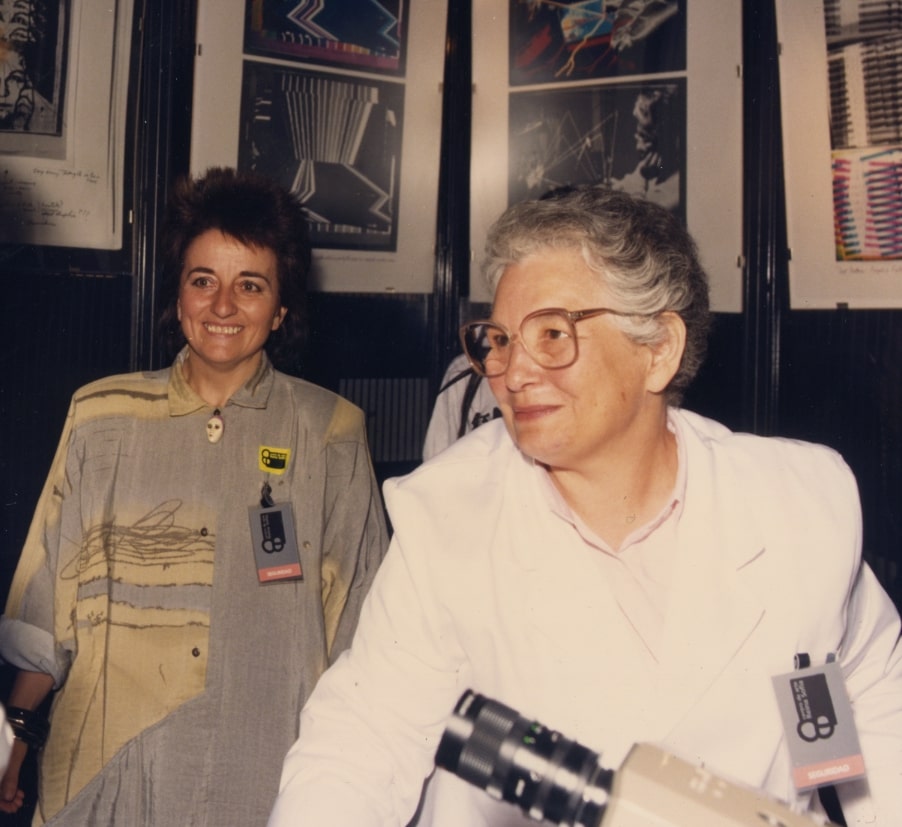
Sheridan founded the Generative Systems program at the School of the Art Institute of Chicago that would continue for a decade. Often combining a variety of equipment in unusual ways, she was interested in exploring the creative possibilities of the latest technology. Like today’s generative art, Sheridan’s work was process and conceptual-focused. Sheridan wrote: "Generative Systems is not primarily equipment and machines, but an…
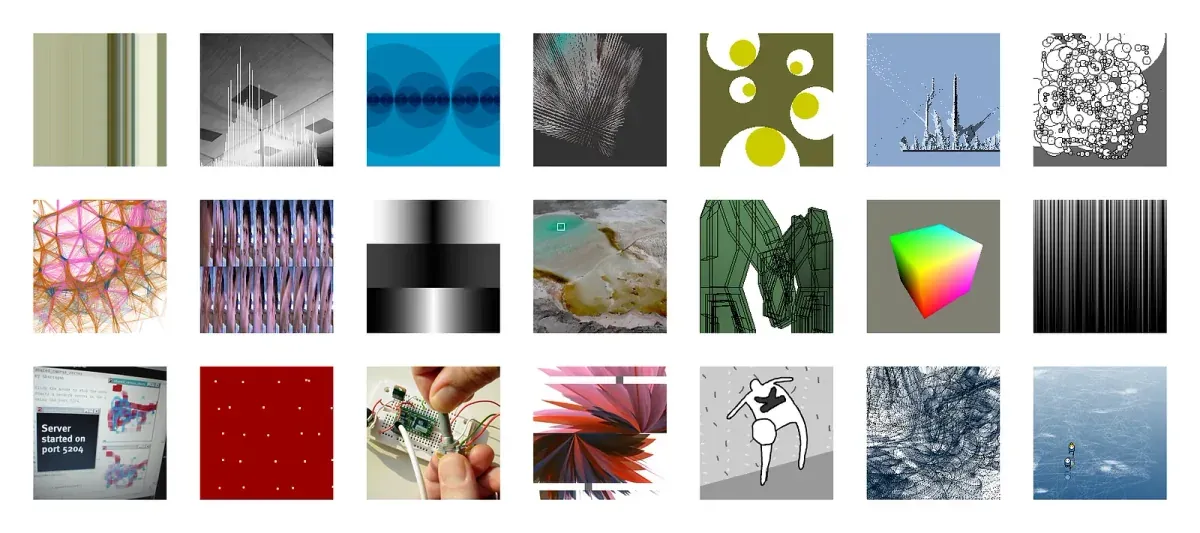
Examples made with Processing in 2003, illustrating the early software’s visual and physical-computing capabilities, two years after the project began. Image published by Processing Foundation in Casey Reas and Ben Fry’s history of Processing, A Modern Prometheus (2018). Image source.
Perhaps important enough for the name of the entire decade, Processing is that important to the development of generative art. It will have to suffice to have heavily inspired the decade’s title, which, to be fair, does include other tooling breakthroughs such as Zach Lieberman’s openFrameworks. Created by Casey Reas and Ben Fry at MIT’s ACG under John Maeda, Processing changed generative art irrevocably.…
AI and on-chain art extend different parts of the story
GANs and DeepDream opened new artistic work with learned models. Art Blocks later organized a platform around minting generative outputs. These developments concern different parts of making and circulating art, and neither exhausts the field. For a wider historical conversation, continue to Casey Reas on the History of Generative Art, Part 1 and Part 2.
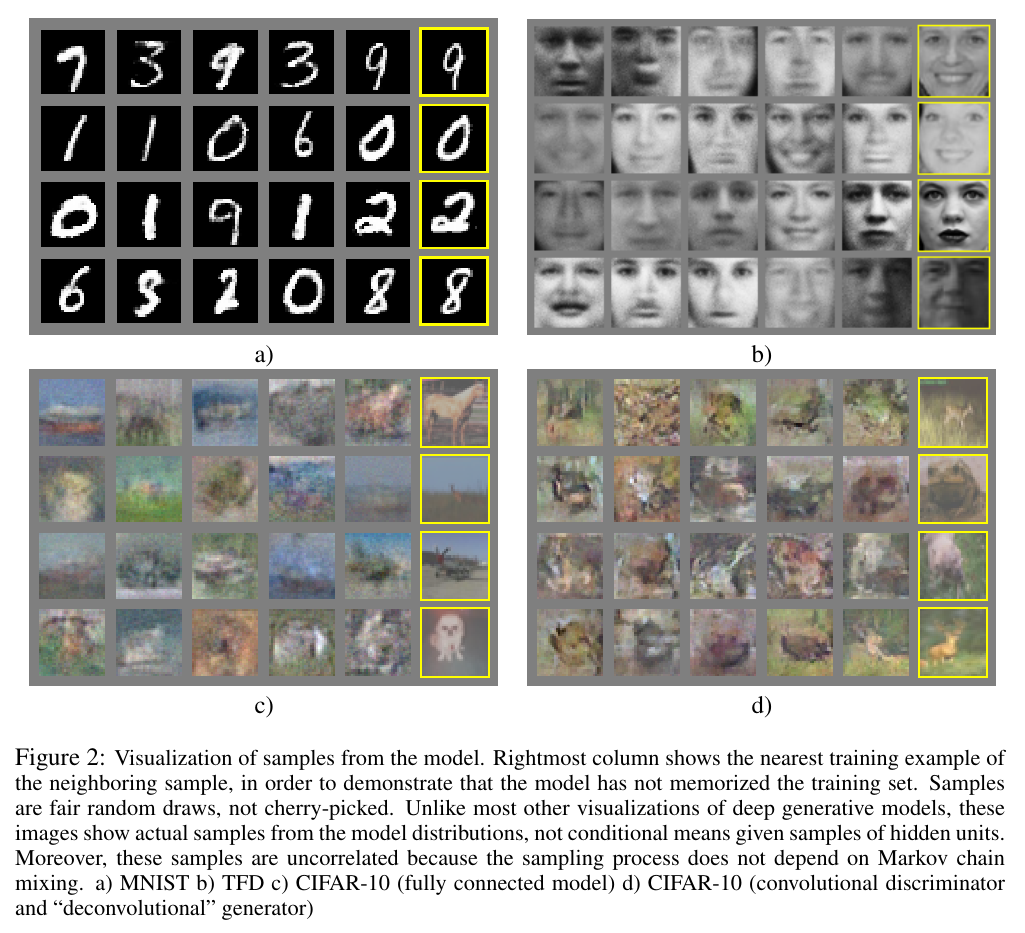
Figure 2 from Generative Adversarial Nets (2014): generated samples for MNIST, TFD and CIFAR-10, with nearest training examples in the rightmost columns. Ian J. Goodfellow, Jean Pouget-Abadie, Mehdi Mirza, Bing Xu, David Warde-Farley, Sherjil Ozair, Aaron Courville and Yoshua Bengio. Figure 2, Generative Adversarial Nets, 2014, p. 6. Source: arXiv:1406.2661. Image source.
In one of this story’s most relevant moments, Ian Goodfellow and his colleagues at the University of Montreal introduced the world to Generative Adversarial Networks (GANs), revolutionizing—and I don’t use the word lightly—the field of machine learning. GANs consist of two models: a generative model that captures the data distribution, and a discriminative model that estimates the likelihood of a sample being from the…
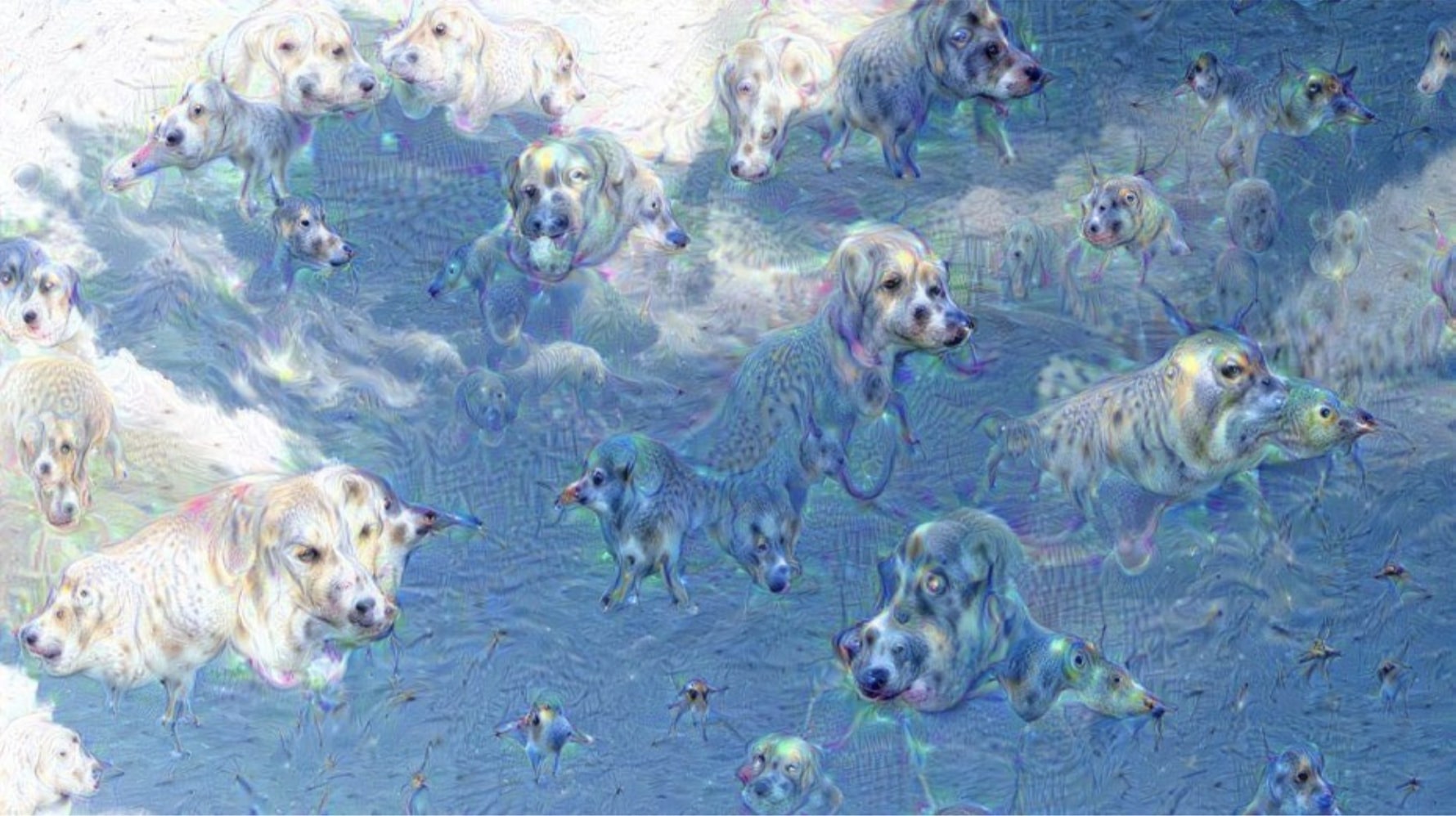
2015 stands as a monumental year in this story—up there with 1965 (digital art’s public beginnings) and 1995 (net.art)—as the year AI art properly took off. GANs had been introduced a year earlier and served as a primary catalyst along with this seminal moment, the launch of Google’s DeepDream. These events ensured 2015’s place in history with important work by AI legends Gene Kogan,…
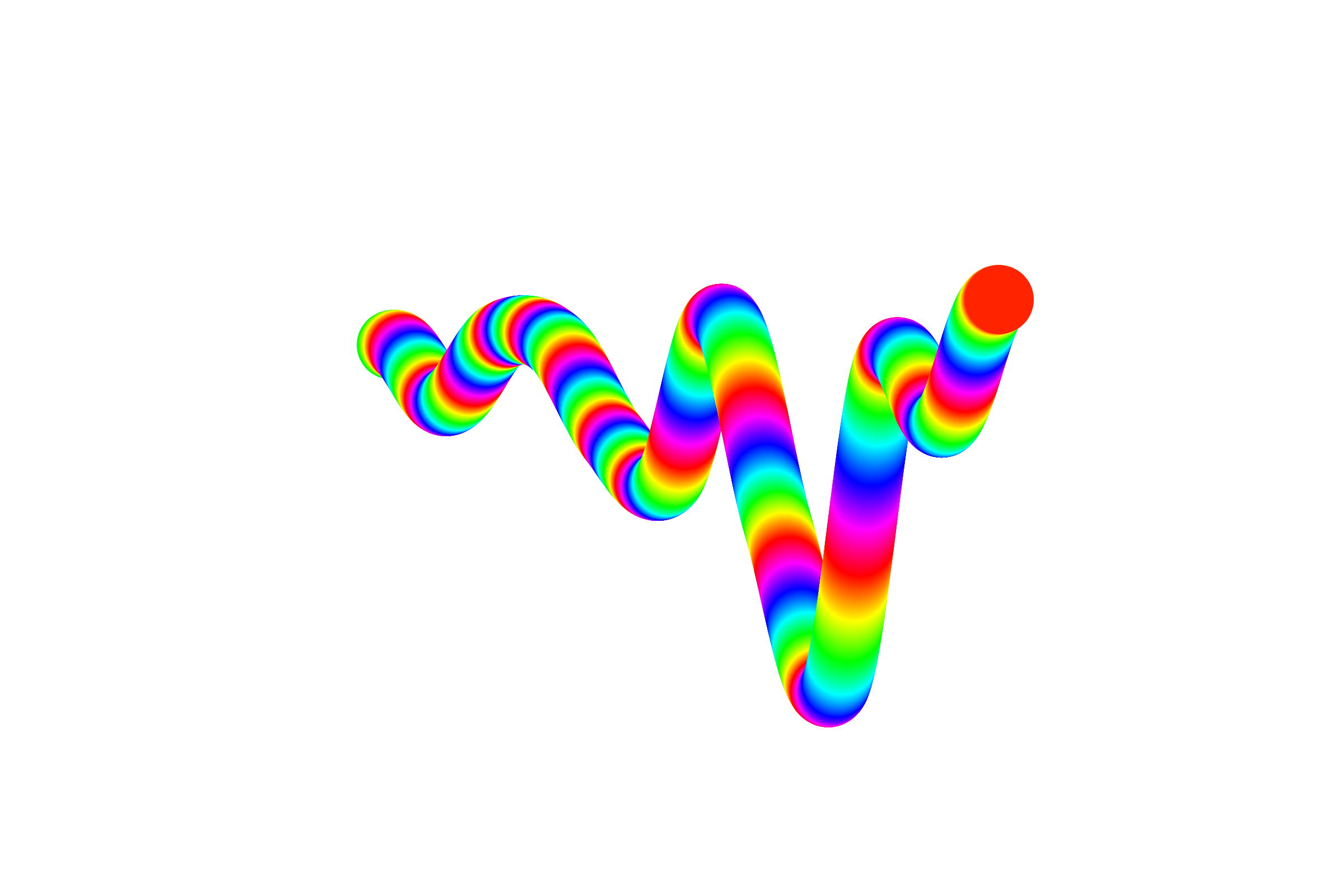
Snowfro, Chromie Squiggle #7997, minted January 16, 2021. From Art Blocks’ genesis series, launched in 2020. Artwork: Snowfro. Courtesy of the artist and owned by Le Random. Image source.
Art Blocks Brings Generative Art On Chain If NFTs unlocked demand, then Art Blocks, founded by Erick “Snowfro” Calderon, provided a space for demand to meet supply, creating a community where artists could manifest the technological, artistic and conceptual advancements of human history to push boundaries in art. The three genesis projects were released on November 27, including Jeff Davis’s Construction Token, DCA’s (Daniel…
This guide connects selected entries from Le Random’s archive of 1,147 moments. Dates follow the individual records. The excerpts, source references and image credits come from those records; follow a moment to read its full account and related interviews.
The archive includes historical precursors and surrounding developments as well as generative artworks. Inclusion does not mean that every object or event was described as “generative art” in its own time.